Category: Blog

  • 38 S&W vs 38 Special: Which Cartridge is Right for You?

    38 S&W vs 38 Special: Which Cartridge is Right for You?

    The 38 S&W and the 38 Special are two popular caliber cartridges that are often compared to each other. They are both 38 caliber cartridges, but they have different dimensions and generate different levels of power. 

    So which one is right for you? 

    That depends on your personal preference and intended use. Both cartridges have been used for self-defense, hunting, and target shooting, so you can’t go wrong with either one.

    The History of the 38 S&W Cartridge

    The 38 S&W cartridge was developed by Smith & Wesson in 1877 for their first revolver, the Model 38. It was designed as a black powder cartridge and was originally loaded with black powder. 

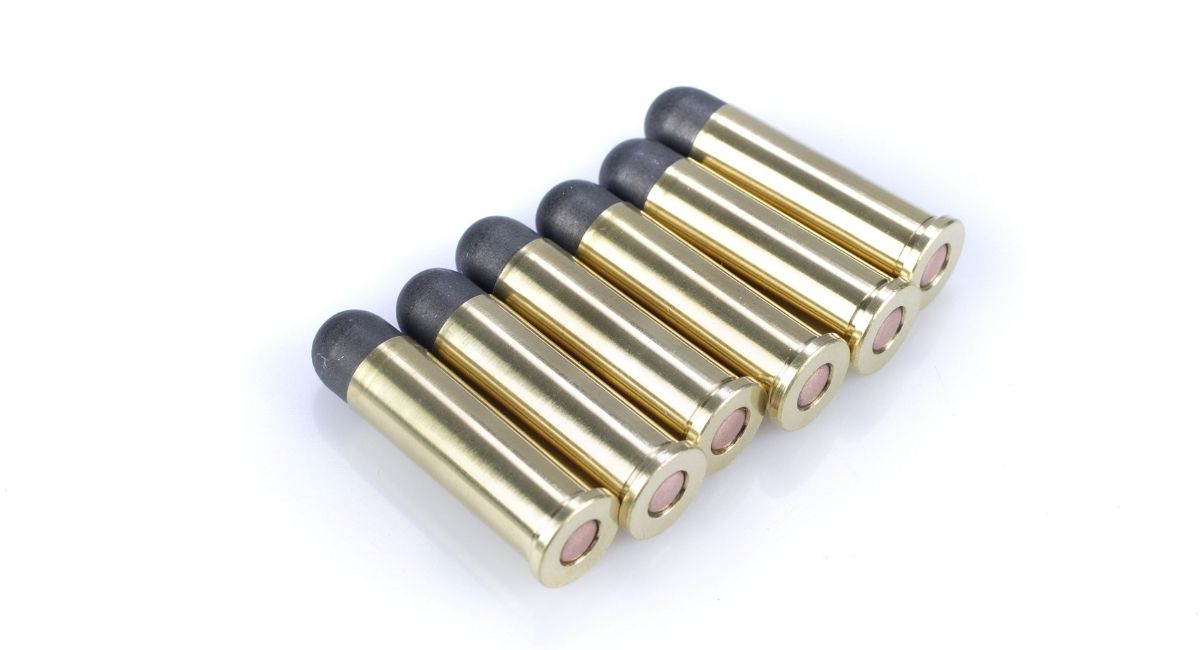
    In 1891, Smith & Wesson switched to loading the 38 S&W with smokeless powder. The 38 S&W has a bullet diameter of .357 inches and an overall length of .98 inches. The 38 S&W is a rimmed cartridge that is typically reloaded with lead bullets.
    38 s&w vs 38 special

    The History of the 38 Special Cartridge

    The 38 Special cartridge was developed by Smith & Wesson in 1898 for their Model 52 target revolver. It was designed as a smokeless powder cartridge and has a bullet diameter of .358 inches and an overall length of .98 inches. The 38 Special is a rimmed cartridge that is typically reloaded with lead bullets.

    The Benefits of Each Cartridge

    Benefits of 38 S&W:

    1. Low recoil: The 38 S&W has low recoil, making it a good choice for shooters who are recoil-sensitive.
    2. Wide selection of firearms: The 38 S&W is available in a wide variety of firearms, including revolvers, pistols, and rifles.
    3. Inexpensive: The 38 S&W is less expensive than other cartridges, making it a good choice for shooters on a budget.

    Benefits of 38 Special:

    1. Higher muzzle velocity: The 38 Special has a higher muzzle velocity than the 38 S&W, resulting in greater stopping power.
    2. Greater range: The 38 Special has a greater range than the 38 S&W, making it better suited for shooting targets at longer distances.
    3. Better accuracy: The 38 Special is more accurate than the 38 S&W, making it a better choice for target shooting.
    4. Larger bullet diameter: The bullet diameter of the 38 Special is .358 inches compared to .357 inches for the 38 S&W. This allows the 38 Special cartridge to penetrate deeper into its target than the 38S & W cartridge.
    5. Greater stopping power: The 38 Special has greater stopping power than the 38 S&W, making it better suited for self-defense.

    The Drawbacks of Each Cartridge

    Drawbacks of 38 S&W:

    1. Lower muzzle velocity: The 38 S&W has a lower muzzle velocity than the 38 Special, resulting in less kinetic energy and less penetration.
    2. Lower stopping power: The 38 S&W doesn’t have as much stopping power as the 38 Special, meaning it can take more shots to incapacitate an attacker.

    Drawbacks of 38 Special:

    1. Higher cost: The 38 Special is more expensive than the 38 S&W cartridge.
    2. Greater recoil: The 38 Special has greater recoil than the 38 S&W cartridge, making it unsuitable for shooters who are recoil-sensitive.
    3. Limited selection of firearms: The 38 Special is available in a limited number of firearms, including revolvers and pistols.

    Which Cartridge Is Better for Self-Defense?

    The 38 Special is the better choice for self-defense because it has a higher muzzle velocity, greater stopping power, and larger bullet diameter. It also has greater recoil than the 38 S&W, making it unsuitable for shooters who are recoil-sensitive. 

    However, the 38 Special is more expensive than the 38 S&W and is only available in a limited selection of firearms.

    If you are looking for a self-defense cartridge on a budget, the 38 S&W is a good choice. If you are looking for the best self-defense cartridge regardless of cost, the 38 Special is the better choice. 

    If you are on a budget or are looking for a revolver or pistol that fires the 38 S&W cartridge, then the Smith & Wesson Model 60 may be a good choice for you. Whichever cartridge you choose, make sure to practice with it so that you can shoot accurately under stress.

    How to Decide Which Cartridge Is Right For You?

    When deciding which cartridge is right for you, consider your needs and preferences.

    • If you are looking for a low recoil cartridge for target shooting or plinking, the 38 S&W is a good choice.
    • If you are looking for a high performance self-defense cartridge, the 38 Special is the better choice. Consider your budget when making your decision as well. The 38 S&W is less expensive than the 38 Special, making it a good choice if cost is a factor.

    Which Guns Fire the .38 Special?

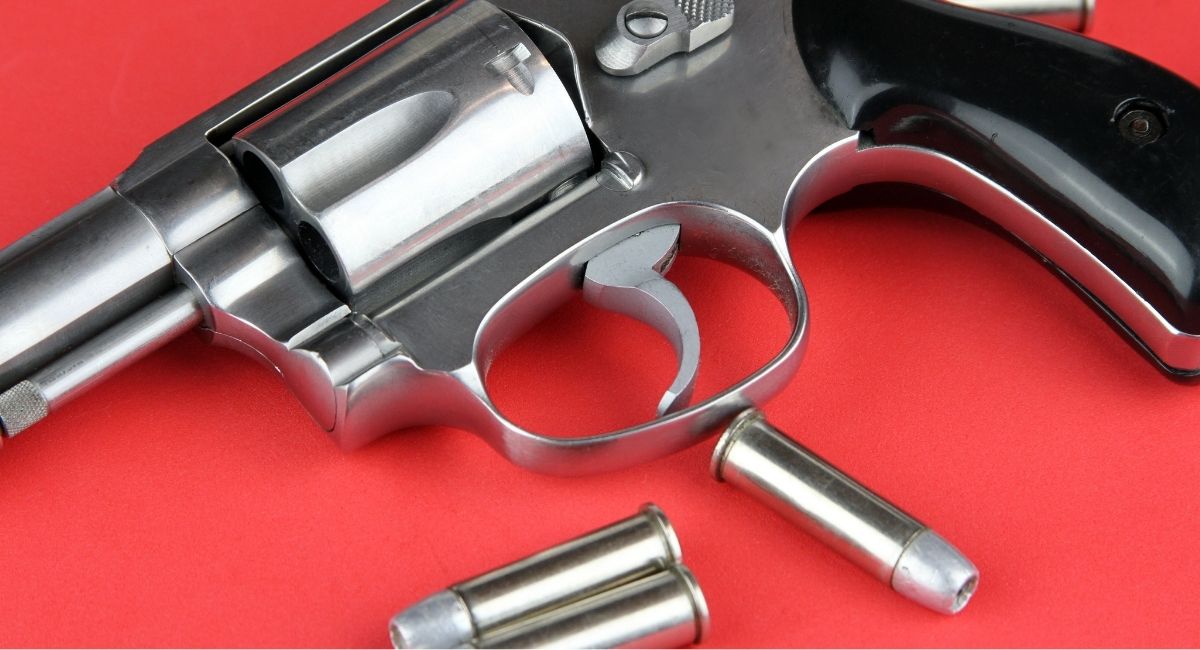
    Some of the most popular guns that fire the .38 Special include the Colt Detective Special, Smith & Wesson Model 60, Ruger LCR, and Taurus Judge.

    The .38 Special is a versatile cartridge that can be used for target shooting, plinking, and self-defense. If you are looking for a revolver or pistol that fires the .38 Special cartridge, there are many great choices available on the market.
    38 s&w vs 38 special

    Which Guns Fire the 38 S&W?

    The .38 S&W is a revolver cartridge developed by Smith & Wesson in 1877 for use in their top-break revolvers. Chambered in .357-.358 caliber, it was also known as the .38 Smith & Wesson, .38 S&W Short, or simply .38 Short.

    In 1899, the United States Army adopted the .38 Long Colt cartridge as its standard sidearm, and it remained in that role until after World War I when it was replaced by the .45 ACP. 

    In 1908, Colt introduced a semi-automatic pistol chambered for the .38 Long Colt and called it the Model 1908 Hammerless. This was followed by the Smith & Wesson’s Military & Police Model of 1909, which used the .38 S&W cartridge.

    Bottom Line: 38 S&W vs 38 Special

    So, which cartridge is right for you if you have to choose between the 38 S&W vs 38 special? If you’re looking for a revolver, the .38 S&W is probably your best bet. But if you’re looking for a semi-automatic handgun, either the .38 Long Colt or the .38 S&W will do just fine. 

    Whichever one you choose, make sure you get plenty of practice with it so that you can be confident in your ability to defend yourself.
  • What Is a Reflex Sight?

    What Is a Reflex Sight?

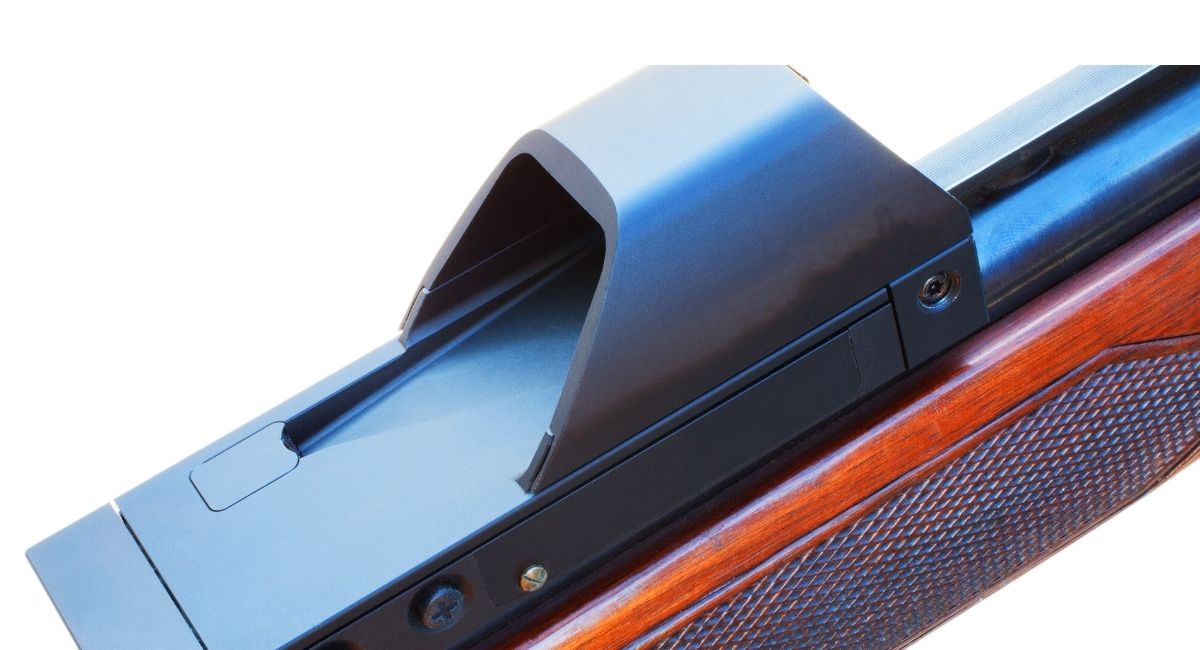
    If you’re looking for a weapon attachment that’s an alternative to a traditional rifle scope with a wider field, then a reflex sight is probably one of the best accessories to help you with fast-paced tactical shooting. Reflex sights provide eye relief because you don’t have to position your eye in the same place each time. Instead, you can look through the lens with both eyes open, allowing you to maintain situational awareness through your peripheral vision.

    But what is a reflex sight? Reflex sights include a sight window, typically with a dot reticle to indicate your target and give you an accurate sight picture. Anti-tank gun sights and anti-aircraft gun sights typically use reflex sights. If you’re looking for something to help with long-range shooting, then a traditional scope may be your best option.

    The Difference Between a Rifle Scope and a Rifle Sight

    A rifle sight is usually just a piece of glass with a limited scope that lets you focus your attention on a particular object in the distance. However, it doesn’t typically include magnification.

    A rifle scope, also called a telescopic sight, uses a magnifier that allows you to see distant objects more clearly.

    There are two main categories of sights: electronic sights (like reflex, holographic, laser, and prism sights) and iron sights.

    Reasons to Use a Rifle Sight for Shooting

    Most people like to use rifle sights and scopes to help them accurately aim and shoot, especially for long-distance shooting. You’ve probably seen snipers in films using scopes to ensure pinpoint accuracy from incredible ranges.

    Rifle sights are useful for competitive shooters as they help with quick target acquisition. Because rifle sights enhance accuracy, they also help keep you safe. For example, if you’re hunting at night, you want to be entirely sure that you’re shooting at a deer and not a person.

    Sights aren’t as good as scopes for long-range shooting. However, they are suitable for fast action shooting, target shooting, and hunting as they allow you to view the entire field with both eyes. They are also helpful for shooting at night if the lens includes illuminating lights.

    There are many different types of rifle sights that you can choose between, which we discuss in more detail below.

    what is a reflex sight

    What Is a Reflex Sight?

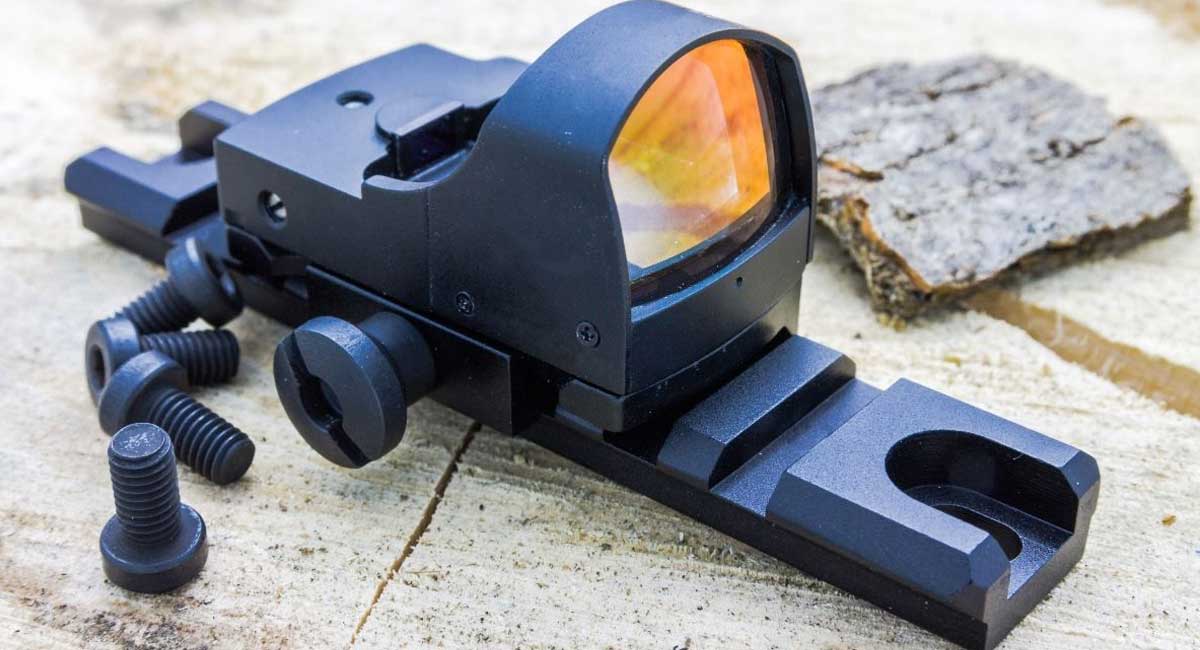
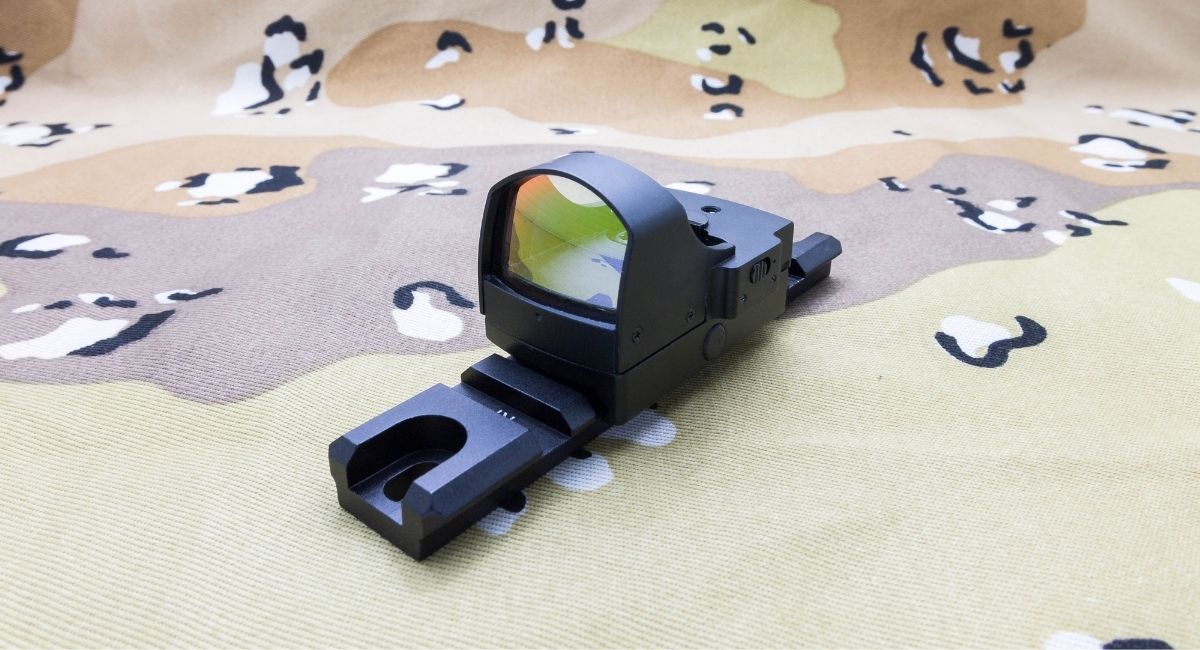
    A reflex sight, also known as a reflector sight or red dot sight, is usually a tube or a single piece of plastic or glass with a small dot or rectangle. This small dot is typically illuminated by an LED light at the rear optic that points towards the front lens.

    There are two kinds of reflex sights: compact sights with one lens and a reticle close to the shooter’s eye and a tubular sight that looks similar to a scope with two lens pieces on either end.

    These reflex sights are a type of optical sight invented in 1900 and often used on various weapons. In the past, they’ve been used on fighter aircraft in both world wars and for military applications like anti-aircraft guns and anti-tank guns. They are often used when there’s a fast-moving target. Since the invention of the red dot and LED reticle technology, reflex sights have become far more popular as they are durable and dependable.

    Reflector sights provide a single, parallax-free virtual image that focuses on the target and removes the problem of aiming. Reflector sights are an excellent choice for amateurs and professionals alike.

    Reflector sights are an alternative to iron sights. These sights can be held away from your eye without distorting the image. You can also use them with both eyes open and see the entire field of sight. An added advantage is that they remove most parallax errors and other issues typically found amongst sighting devices.

    What Are the Alternatives to Using a Reflector Sight?

    There are many different types of sights that you can use as alternatives to a reflex sight, some of which we explore below.

    Prism Sight

    A prism sight, also called a prismatic scope, uses prisms to focus light. Prism sights don’t provide variable magnification, which means you will need to know what distance you’ll be shooting from before buying the relevant magnification. You can extend their effective range using various magnification. However, prism sights can’t avoid parallax errors entirely, but they are great for astigmatism.

    Prism sights often place the reticle onto the scope, which means that even if you lose battery power, you can still use the scope (unlike a reflex scope that has a battery-powered LED light reticle). Prism sights also require you to keep your eye in the same position each time, whereas red dot sights allow you more freedom.

    Prism sights make an excellent weapon attachment for hunting and survival rifles that don’t rely on batteries.

    Holographic Sight

    Holographic weapon sights don’t magnify images. Instead, you look through the optical window to see a holographic, 3-dimensional reticle illuminated by a laser superimposed on the field of view. You can adjust the sight for windage and range by moving the optical window at an angle.

    Holographic sights are easier on your eyes, more accurate, and are often the choice of sight for close-quarter combat. However, their battery life is slightly shorter than a red dot sight. Additionally, they are typically bigger than reflex sights and need a rifle to mount, whereas reflex sights are more compact and can be used with handguns.

    what is a reflex sight

    Laser Sight

    A laser sight also helps you zero in on a target, but these types of sights use a laser beam projected onto a target to indicate where you are aiming. They are mostly used by military personnel for law enforcement purposes, although some people use them for hunting and self-defense.

    Magnified Scopes

    Magnified scopes, also called telescopic sights, use a refracting telescopic lens to provide an exact point of aim. Their advantage is their powerful magnification abilities, compared with non-magnifying sights like a reflector sight, holographic sight, or laser sight. They are primarily used on long-barrel guns like rifles and are usually attached via a scope mount. They can be combined with a night scope for nighttime shooting or hunting. They typically include various adjustment controls like elevation control, windage control, parallax compensation control, and diopter adjustment.

    Pros and Cons of Using a Reflex Sight

    There are many pros and cons to using a reflex sight. Below we look at the advantages and disadvantages of reflex sights to give a comprehensive overview of their abilities.

    Advantages of Using a Reflex Sight

    • Offered in a wide range of models and options that are extremely cheap and affordable
    • Suitable for a range of shooting conditions, including nighttime
    • Helps to ensure accuracy and is better than not using a sighting device at all
    • LED lights light up the reticle making it easier to see your target
    • Suitable for people of all skill levels, including beginners and professionals
    • Easier for people with poor eyesight, as you don’t need to keep your eyes in the same position each time, and you can keep both eyes open
    • Ideal for fast-paced shooting action where you can quickly aim and fire without having to position your eye
    • Small enough to be used on a handgun

    Disadvantages of Using a Reflex Sight

    • Batteries must be replaced, making the attachment unsuitable for survival hunting
    • No magnification and not ideal for long-range shooting where you need to see a distant target clearly
    • Good models can be costly, but cheaper options are available

    Final Thoughts on Reflex Sights

    Having a sighting device is useful for many reasons. You may notice that many professional and amateur hunters use this type of hunting accessory. Reflex sights are also beneficial for home defense purposes or tactical shooting.

    Reflex sights don’t have much parallax error and include LED illumination that allows them to work in different light conditions.

    Reflex sights also help improve accuracy and can easily be used in a fast-paced shooting environment. Additionally, they are compact enough to be used on handguns. If you are looking for a versatile weapon attachment that can be used for numerous occasions, you may want to consider adding a reflex sight to your collection.

  • Gun Guide: What Is a Single-Action Revolver?

    Gun Guide: What Is a Single-Action Revolver?

    Whether you have a shotgun, semi-automatics, a traditional double-action (TDA) weapon, or a semi-automatic pistol, there are many convincing reasons to also own a single-action revolver. Single-action handguns make a great backup weapon or concealed carry weapon. Additionally, single-action handguns need to be cocked before being fired, which enhances safety.

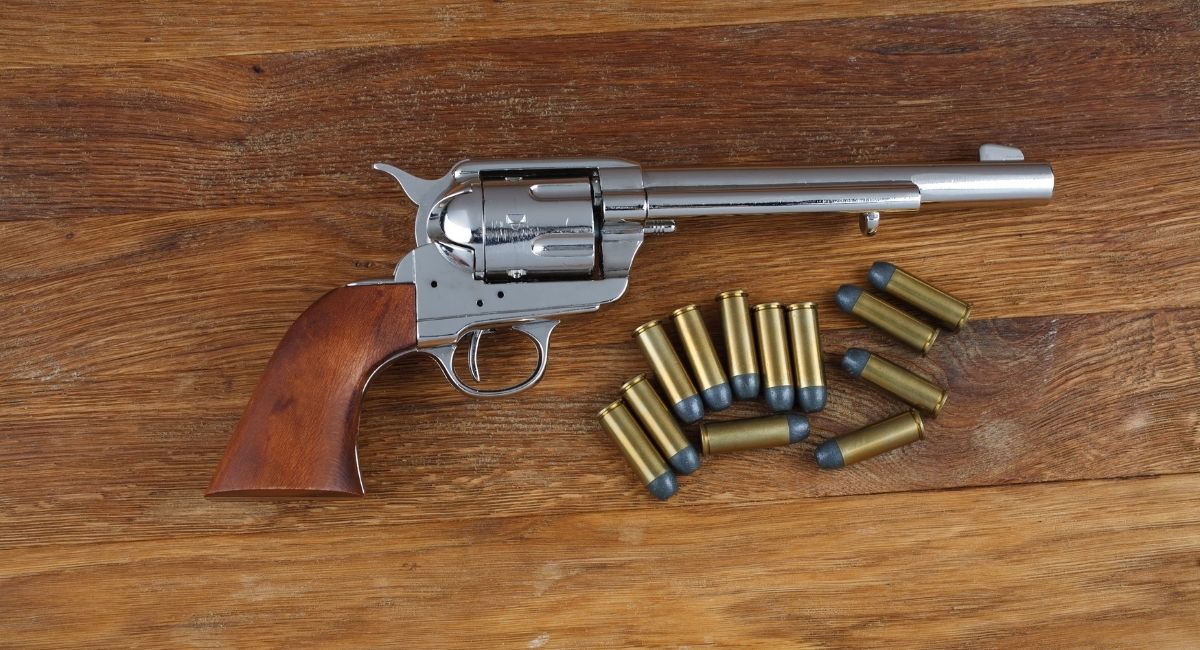
    A single-action revolver, also referred to as a single-action firearm, is a type of weapon that typically has a six-round cylinder. It also includes a firing mechanism that requires you to first cock the weapon before pulling the trigger, releasing the hammer, and setting the firing pin to hit the cartridge. These weapons are known for their lighter trigger pull and are popular for target shooting because of their higher accuracy.

    what is a single action revolver

    How a Single-Action Revolver Works

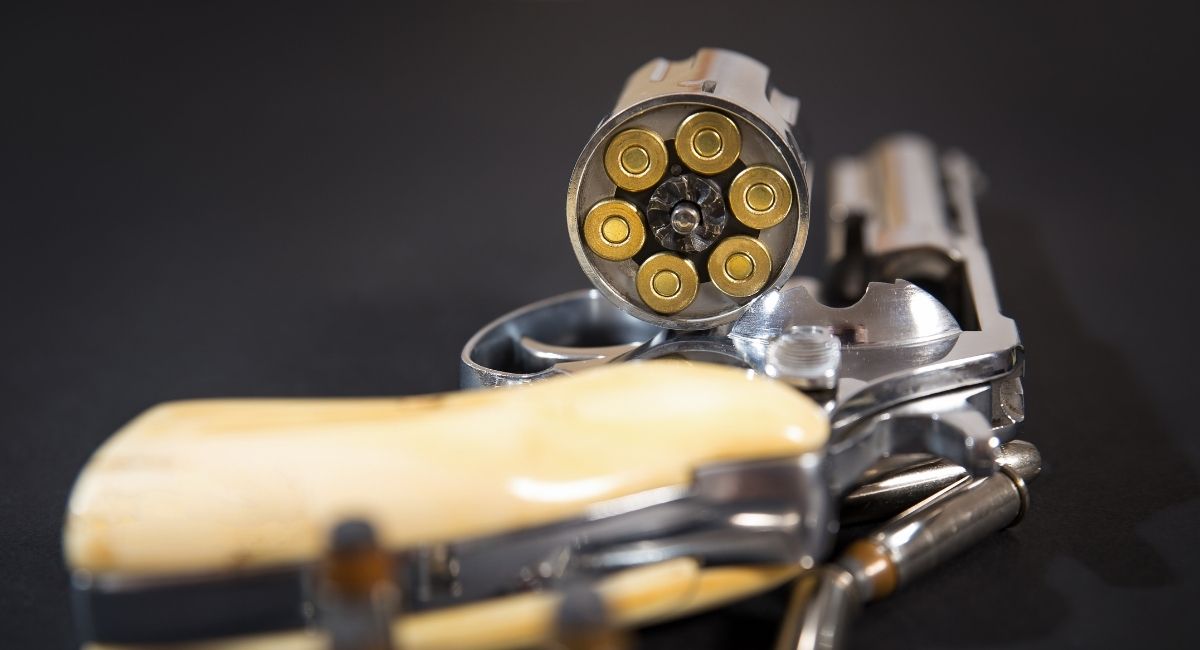
    Firstly, a revolver is a gun with at least one barrel and a revolving cylinder with multiple chambers that each house one cartridge. When you want to fire a round, you need to cock the hammer. This will cause the cylinder to partially rotate and align the chamber and cartridge with the barrel. Then, when you pull the trigger, a bullet will be fired out of the bore.

    With a single-action revolver, you have to manually cock the hammer. Each time you fire another round, you must repeat the same process of manually cocking the hammer before firing. When you pull the trigger, a firing pin is driven into the cartridge, which detonates it and forces it out of the barrel.

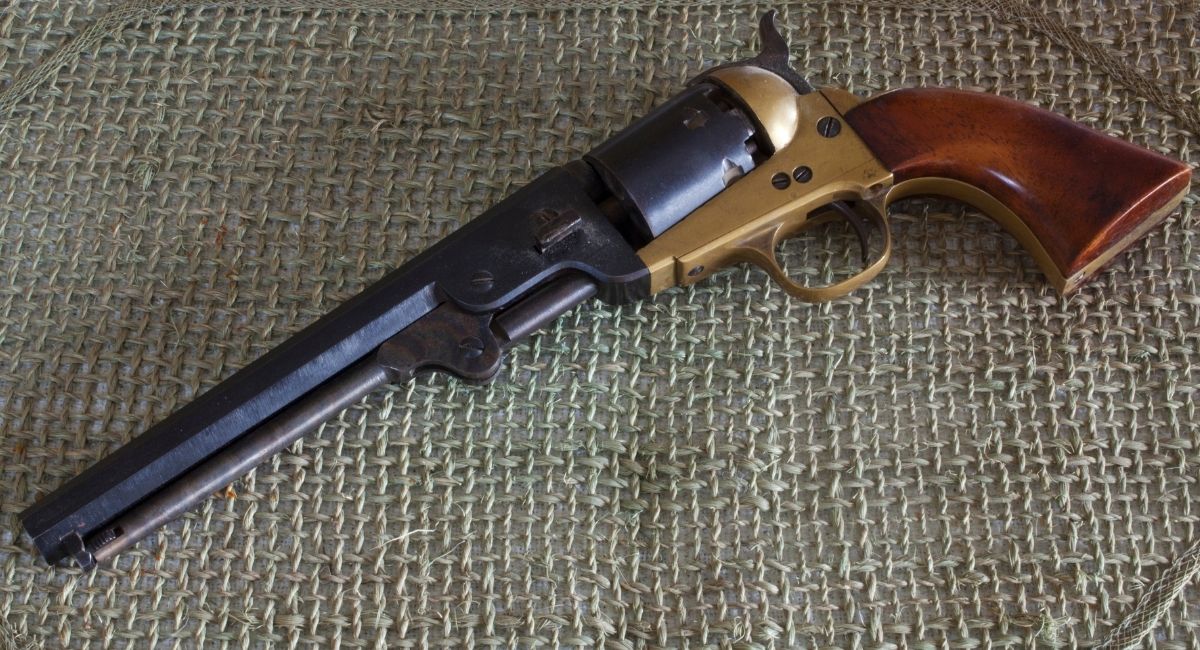
    Some older revolvers have a safety feature that lets you partially pull the hammer, locking it in a loaded position without resting the firing pin on the cartridge case. However, some revolvers, like the Colt Paterson, rest the hammer on the primer and can accidentally discharge, which can be dangerous.

    Some single-shot firearms are single-action guns, but instead of a revolving cylinder, they only have a single reloadable slot.

    A single-action revolver usually has a removable pin that helps keep the cylinder in place. These weapons also have a loading gate that lets you reload ammunition into the weapon, usually on the right-hand side. You open the gate, put the hammer in an unlocked position, and then turn the cylinder to verify that each chamber is empty before reloading the gun.

    Many of these weapons have a “swing out” cylinder that allows you to check if there’s a loaded chamber and easily reload your weapon.

    Some single-action revolvers also have an ejection rod to eject any fired cartridge cases from underneath the barrel.

    Most guns with a revolver mechanism are handguns, but shotguns, rifles, and even cannons use this same principle. Semi-automatic pistols are generally more popular than revolvers. However, revolvers make an excellent backup weapon and are still used for private security, sport, and hunting purposes.

    History of the Single-Action Revolver

    In the era of single-shot weapons, a major drawback was your vulnerability to attack while you were busy reloading. That prompted the development of multi-barrelled weapons in the 16th century, like the revolver. Since then, revolvers have undergone many design changes and upgrades with quality features.

    In the 19th century, Samuel Colt registered a U.S. patent for the Colt revolver, which became widespread and used worldwide. In 1873, Colt introduced one of their most famous handgun revolver models: the Single Action Army or “Colt .45,” also known as “the Peacemaker.” This model was originally made for the U.S. Army. The weapon included six cartridges and was offered in various calibers and barrel lengths.

    Eventually, Horace Smith and Daniel B. Wesson, who formed the Smith & Wesson firearms company, patented self-contained metal and individual cartridges in the late 1800s, which were a novelty at the time. This meant that gun users no longer had to laboriously pour gunpowder into cartridges and fit caps into the cylinders.

    Since then, there have been many design reforms and improvements. Compared with the first Colt revolver, which had to be front-loaded, modern revolvers don’t need to be loaded through the muzzle, and there are also improved ejection mechanisms.

    what is a single action revolver

    Difference Between Single-Action and Double-Action Revolvers

    When discussing the pros and cons of a single-action revolver, it’s useful to understand how it compares with a double-action revolver. Below we take an in-depth look at each type of revolver and how they differ while also pointing out their pros and cons.

    What is a single-action revolver?

    A single-action revolver or “six-shooter” has a single-action trigger that requires you to cock the gun before pulling the trigger. Many of these weapons are handguns, but you can also find longer barrelled guns that work on a revolver mechanism. Many rifles, shotguns, and other weapons like grenade launchers use revolver action.

    If you’ve watched old western films, you probably noticed single-action firearms being used in duals and showdowns. A major advantage of using single-action guns is the convenience of pulling a lighter trigger that doesn’t affect the bullet’s accuracy. However, you have to cock the gun before firing, which can take time.

    Various single-action semi-automatic guns operate similar to revolvers, except that the recoil automatically cocks the hammer for the next shot after the initial shot is fired.

    Compared to double-action revolvers, the single-action revolver also has a lighter trigger pull and may be preferred by some gun owners.

    What is a double-action revolver?

    A double-action revolver performs differently from a single-action revolver. When you pull the trigger, the gun is cocked, the hammer is released, and the weapon is simultaneously fired. This happens every time that the weapon is fired.

    Double-action models don’t require you to cock your gun before firing, allowing you to draw and fire your weapon in one quick action without cocking it first. While it may make you quicker on the draw, it may be harder to squeeze the trigger. Some consider this a safety benefit, as it’s more tricky to have an accidental discharge.

    You can often use this type of weapon in single-action mode, meaning you can cock the hammer manually and wait to pull the trigger to fire the shot. However, you can also purchase double-action-only (DAO) weapons, where you can’t manually cock the hammer, and they can only be used in double-action mode.

    A double-action firearm, such as a revolver with double-action mode, is useful for working in a high-stress environment where you need to be able to draw and fire simultaneously or where a subsequent shot can be fired quickly. This is one of the reasons why many police officers often carry double-action weapons.

    However, double-action semi-automatic pistols often work by firing the first shot as a double-action and the follow-up as a single action.

    Advantages of Using a Single-Action Revolver

    Single-action revolvers are an excellent gun for anyone wanting to practice shooting and accuracy. They are also good guns for ensuring a single, purposeful shot, as you need to cock the weapon before shooting.

    But single-action revolvers have several drawbacks, making them a great backup gun but not necessarily a primary weapon. They are reliable and accurate, which is why they are so popular. They are also small enough to be used as concealed carry weapons for self-defense purposes.

    They are easier to fire than a double-action firearm, which has a tougher trigger mechanism. This makes single-action revolvers more of a safety hazard because of the potential for accidental discharge.

    Types of Single-Action Revolvers

    There are many types of single-action revolvers, and one of the most famous is the Colt Single-Action Army, which was made with different barrel lengths and calibers. Interestingly, the barrel length used by the U.S. Cavalry was around 13 inches.

    Other famous single-action revolver models include the Taurus .45 Colt, Remington Model 1890, Nagant M1895 revolver, Mauser C78 (or M78 Oberndorf),LeMat Revolver, Ruger Blackhawk, and the Gasser M1870.

    As revolvers continue to advance, the days of relying on black powder rifles and carrying around loose powder are gone. Nowadays, you can find revolvers in various designs, including those with a stainless steel finish and others made from nickel-plated steel. Many American revolvers are on the market, but you can also find revolvers made in Europe, Russia, and other countries.

    Wrapping Up: Summary of Single-Action Revolver Benefits

    If you’re considering buying a weapon, there are many benefits to owning a handgun, particularly a single-action revolver. These positive aspects include the lighter trigger pull and the added safety feature of having a manually-cocked hammer before the weapon fires.

    Not only do they make a great backup weapon, but there are also many models to choose from, allowing you to choose one that fits in your price range. Plus, single-action revolvers are great for target shooting, and many police officers and security professionals choose to carry them.

    Hopefully, the answer to the question “what is a single action revolver?” is now obvious.

  • Best Hunting Cartridge: 270 vs. 308

    Best Hunting Cartridge: 270 vs. 308

    The global hunting community often discusses different ammo types, and ammunition selection can become quite technical. Sometimes it’s a matter of personal choice. It also depends on the type of hunting rifle and the rifle’s intended use.

    Many factors influence whether you’re successful in hunting, including shot placement, bullet selection, ballistic properties, bullet weight, bullet drop, and trajectories.

    Here we compare two popular hunting cartridges, the .270 vs. .308, to help you make an informed decision about when to use each kind of round.

    History of the .270 vs. .308

    Choosing the right type of hunting ammo is important. You need to understand what you’re buying and how it will perform. American game hunters are particularly fond of the .270 and .308 rounds, as both offer benefits for short-range and long-range shots. This ammo can also be used for big or small game at the 500-yard mark and potentially further.

    Historical Overview of the .308 Cartridge

    During the Korean War, the U.S. military used the .30-60 cartridge. Eventually, the military realized the need for a battle rifle that could use semi-automatic and fully automatic firepower with a detachable magazine, as they were competing against weapons like the AK-47.

    The .308 cartridge was first designed for the M14, which was used in the Vietnam War. However, M14s were later replaced with M16s for military purposes, which used different-sized cartridges. Although the military stopped using the .308 as a primary rifle cartridge once the M16 became the staple, military snipers still used it for long-range shooting and in fully automatic machine guns like the M60.

    Afterward, the .308 became popular with ammunition manufacturers once Winchester released the .308 for civilian use in 1952. It was popular for the National Rifle Association’s long-range shooting contests and hunting various animals, including elk, black bears, and deer.

    Today, the .308 Winchester is still popular for hunting medium- to large-sized game, law enforcement operations, and accurate short-action caliber activities.

    270 vs 308

    Historical Overview of the .270 Cartridge

    Following the Spanish Civil War, the U.S. military was inspired by the Spanish 7x57mm Mauser and wanted to find an equally effective round. They selected the .30-06 Springfield, which was compatible with their 1903 Springfield bolt action rifles that could fire 150-grain bullets traveling 2,700 feet per second (fps).

    Winchester was equally inspired by the Mauser round and designed a cartridge that could accept a smaller bullet and be fired with a faster muzzle velocity. Because of this, the .270 Winchester was born in 1925. Initially, it was compatible with the Winchester 54 Bolt Action Rifle and could fire 130-grain bullets using a 3,140 fps muzzle velocity.

    For many years, this round was not particularly popular. However, after WWII, Jack O’Connor was so complimentary of the .270 in the Outdoor Life magazine that it became popular, especially for big game hunting.

    Today the .270 is only used in a few weapons, like the 6.8 Remington SPC and the .270 Winchester Short Magnum. It has a flatter trajectory, versatile ammo, and is an ethical long-range hunting round that can shoot both lighter bullets for smaller game and heavier bullets for larger game.

    270 vs 308

    Comparison of the .270 and .308 Cartridges

    It can be complicated to compare these two rounds, and many people prefer using one over the other. Below we look at the .270 vs. .308 and compare them in terms of ballistics, recoil and muzzle rise, accuracy, trajectory, price, and the availability of compatible rifles.

    Cartridge Comparison of the .270 vs. .308

    Ballistics

    Ballistics involves the mechanics of firing a weapon, including how a projectile performs and launches. Typically, a .308 Winchester is loaded with projectiles ranging from 150 to 180 grains, with muzzle velocities reaching around 2,500 to 2,800 fps. This can vary depending on the weight of the bullet and the length of the gun’s barrel.

    The .270 travels quicker because it uses lighter bullets inside a larger case. It’s usually loaded with bullets ranging between 130 to 150 grains, and the projectiles usually travel around 2,800 to 3,100 fps.

    Because the .270 uses a lighter bullet, it can travel faster, which means the effective range of the .270 can be slighter longer than the .308. In practice, this can translate into an additional 100 yards of effective range, which is why many long-range hunters prefer the .270.

    However, advocates of the .308 often prefer this round because of the heavier projectiles and the ability to land larger game animals. Despite this, the .270 can also be used to bring down large game.

    Recoil and Muzzle Rise

    Hunters usually consider recoil an essential factor in choosing ammunition, as it affects accuracy – the more recoil, the less accurate the shot.

    The recoil of both calibers is very similar, although recoil often has more to do with the type of weapon being used and the bullet weight. If you use a 180-grain bullet, the .308 will have more recoil power than a 130-grain .270. But when you compare a 130-grain .270 round with a 147-grain .308 round, there’s not much difference in recoil.

    Neither caliber will likely give you a sore shoulder. However, as the .270 has a lighter bullet, it will have less recoil than the .308.

    In terms of muzzle rise, there’s also not much difference between the two rounds. Additionally, muzzle device options are available that can help reduce muzzle rise.

    Accuracy

    Many factors affect a shooter’s accuracy. These include trigger control, sight alignment, and the type of rifle used. While many will say that the .270 is more accurate because of its flatter trajectory and reduced recoil, many shooters that use a .308 will also achieve excellent accuracy. Both the .308 and .270 are very accurate, and comparing them in terms of accuracy won’t make much difference.

    Trajectory

    Shooters are increasingly interested in the trajectory of a bullet because it affects accuracy and effective shooting range. The .270 has a flatter trajectory than the .308 because of its higher muzzle velocity. This means that if you’re choosing between the two for long-range shooting, then the .270 likely has a longer effective range. But for shorter ranges around 400 yards, both will have a similar trajectory performance.

    Price

    Price is always going to be an important consideration when buying ammo. For long-range shooting, there’s little difference in price between the .270 and .308. Generally, the .270 rounds will be slightly more expensive than the .308 rounds.

    It’s always important to verify that the ammo you use for a new rifle is widely available and relatively inexpensive. Luckily, both the .270 and .308 are popular rounds and are readily available. In general, you’ll find it easier and slightly cheaper to buy .308 rounds.

    Compatible Rifle Availability

    Although ammo availability should be considered, it’s also important to determine your rifle’s compatibility with a .270 or .308 round. Most big rifle manufacturers make guns that take either round. But if you have a semi-automatic rifle, you will probably be limited to the .308, although you could try the Browning BAR in .270.

    270 vs 308

    Hunting Calibers: Which Ones Are the Best?

    As you can see, it can be challenging to choose between the Winchester .270 vs. .308 cartridges for hunting with your game rifle. When hunting small game, you’re probably going to be better off with the .270, as the bullet is lighter with a flatter trajectory and is also great for long-range shots. The .308 is probably the best option for large game because of its heavier bullets that can penetrate thick bush.

    However, you also need to consider what range you’ll be shooting from. For long-range shooting over 500 yards, the .270 may be a better choice, as it has slightly less recoil and a greater effective range.

    In general, both options perform well for long-range and shorter-range shots.

    Wrapping Up: Cartridge Comparison for Hunting Rifles

    When comparing the .270 vs. .308, it’s clear that both are very similar and make an excellent choice for hunting a game animal, whether big (e.g. deer hunting) or small. While there’s not a huge difference between these popular cartridges, there are a few small points that we have covered in this review.

    For an ethical shot, a flatter trajectory, and a slightly reduced recoil, the .207 seems to be a favorite. If the small difference in the cost of ammo is important, then the .308 is preferable. No matter the model of your favorite rifle, if it’s compatible with either cartridge, you’re bound to have a good time hunting.

  • What Is the Effective Range of a .308?

    What Is the Effective Range of a .308?

    If you’re thinking of buying .308 caliber ammunition, then you’re probably wondering, “what is the effective range of a .308?” The effective range is the distance a gun can shoot a bullet and still be accurate. This is important, especially if you are hunting and want to ensure that you can hit your target or if you’re looking for a self-defense weapon.

    Many factors affect range, including the bullet weight, the type of weapon, wind speed, and muzzle velocity. In essence, a .308 is not intended as a long-range cartridge. If you shoot a .308 in optimal conditions, its maximum range is about 1,000 yards, but its effective range is around 500 yards.

    This article looks at what you can use a .308 caliber rifle for, its effective range, and the pros and cons of using a .308.

    what is the effective range of a 308

    What Is a .308 Round?

    The .308 Winchester is one of the most popular and well-known cartridges in the world, particularly among the U.S. military, gun enthusiasts, and the civilian market. It’s a rimless cartridge developed in the 1950s and released for commercial use in 1952. Since then, it’s been widely used by target shooters, military snipers, hunters, sharpshooters, and shooting contests.

    Its popularity stems from its impressive velocity and penetration abilities. It’s also known for performing well when used in a bolt gun and with semi-automatic weapons, specifically the AR-10.

    It’s also a remarkably versatile round that can be used in hunting to target several different species, including deer, coyotes, hogs, antelopes, bears, mooses, sheep, and bobcats.

    What Can You Use a .308 For?

    As mentioned above, the .308 is known as a hunting cartridge because it offers a lot of power and control. It’s also extremely reliable for hunting and field conditions, making it even more versatile. It works well in a wide range of firearms and is suitable for anyone with a short-action rifle.

    In addition to the .308 being an excellent hunting cartridge, it’s also popular for self-defense and sniper rifles. Police, military snipers, and civilian target-shooters use a .308 round because of its reliability and accuracy. Depending on the bullet weight, a .308 round can be accurate up to 1,000 yards, which is a distinct advantage in any target sport or military endeavor where accuracy is critical.

    What Is the Effective Range of a .308?

    The effective range involves the distance between the bullet and its intended target. In optimal conditions, a .308 may reach 1,000 yards, and expert sharpshooters can still hit their targets. But on average, the effective range of a .308 is 500 yards, although there are ways you can extend this range.

    Weighing the Pros and Cons of Using a .308 Round

    Many people focus on the effective range of a .308 and don’t consider other factors.

    It’s always useful to weigh the pros and cons of any product you’re interested in. This way, you can compare the benefits and drawbacks and consider how those will affect you and your particular needs.

    Below we look at a comprehensive list of pros and cons for .308 rounds to help you make an informed choice and determine if this round is right for you.

    Pros of a .308 Round

    • It’s an excellent round to use for any type of big game hunting or for targeting smaller animals.
    • This type of ammo is widely available and can be pricey. However, it’s less expensive than other cartridges like the .300 or the .30-06.
    • The recoil isn’t as strong as other rounds, meaning it’s less likely to cause a sore shoulder.
    • It’s compatible with a wide range of standard-issue rifles, making it a versatile round to carry.
    • It doesn’t get jammed as often as other rounds because it has a shorter shell.
    • It has an average effective range of around 800 yards and can be extended when necessary.
    • It’s reliable to use in all different terrains and types of weather.
    • It’s accurate up to 1,000 yards, making it great for sniping, hunting, and target shooting.
    • It has many uses, including military applications, civilian sports, hunting, and self-defense.

    Cons of a .308 Round

    • It’s more expensive than other cartridges.
    • The effective range is not as far as similar cartridges because of the heavier bullets.
    • It’s not as effective as a long-range cartridge.
    • You may not be able to purchase and use a .308 round in all countries, as it’s considered a military-grade cartridge in some countries and therefore banned from being used by civilians.
    • Some shooters complain that the .308 has a flatter trajectory compared with other bullets. However, it can be balanced with the right grain weight.
    • It’s not as popular with larger game hunters.

    Final Thoughts on the Effective Range of a .308

    Many different bullet designs offer something different. When choosing a type of bullet, there are various factors you must consider, including the bullet weight, barrel length, projectile weight, extended range casings, and bullet penetration abilities.

    The .308 is one of the most popular bullet cartridges on the market. Although it may have a flatter trajectory and not as suited to deer-sized game, the .308 is a versatile round and can be used in many different settings and weapons.

    While the .308’s effective range may not be as impressive as a 26 Nosler, there are many things you can do to extend its range. When buying ammunition, the bullet’s range is an important consideration, but you should also consider other features like reliability, versatility, and pinpoint accuracy.

  • Comparing the .357 SIG vs 9mm Handguns: What’s The Difference?

    Comparing the .357 SIG vs 9mm Handguns: What’s The Difference?

    The 9mm Luger and the .357 SIG are two extremely popular handgun cartridges. They’re vastly different in performance, handgun type, and use, even though both are really common.

    What are the differences you should know between the .357 SIG vs 9mm handguns? Will one firearm suit your needs better than the other? Today, we explore the differences between them to see which caliber is best for your needs.

    Story of the 9mm

    Let’s start with a bit of background.

    Georg Luger, who was a designer of DWM firearms, developed the 9mm Parabellum in 1902 as a service cartridge. It was designed for the DMW Luger pistol that was semi-automatic and it was called the Luger, or the Pistole Parabellum. The lethality of the pistol was at 50 meters. The previous handgun ammunition, which was heavy and large, improved with this new caliber.

    Years later, the compact cartridge is easy to handle and has less recoil. Accurate and lightweight, handguns chambered in 9mm hold a lot more cartridges than those in higher calibers, thanks to the small size. The first submachine guns were introduced by the time the first world war erupted, and they were given the ability to go through field gear thanks to the fact they were chambered for 9mm ammunition.

    The popularity of the 9mm spread in 1935, after the birth of the Browning HiPower. After a while, its use grew not only in the armed forces, but among civilians and police agencies. Some other important developments for the 9mm include when the 9×19 Parabellum was adopted by NATO as their official sidearm cartridge in 1995, and when the US Military dropped the venerable 45 ACP and started using the 9mm as their official cartridge.

    The 9mm cartridge was also adopted by some of the largest police forces in the country, such as Los Angeles and New York City, proving that the .38 revolver was inferior to the 9mm. Another important milestone: after replacing the 9mm for a certain period of time for the more modern 10mm cartridges, the FBI returned to the 9mm Parabellum in 2014.

    By the 90s, most civilian gun owners had moved away from handguns like the .357 Magnum and the .39 Special and instead favored 9mm semi-automatic handguns. This trend was followed by the availability of ammunition, and the 9mm cartridges became easier to find than others.

    .357 SIG

    Story of the .357 SIG

    The .357 SIG was created in conjunction with the Federal Premium and SIG Sauer, and it was introduced for sale in 1994. It was designed to be used in a semi-automatic handgun and has a better capacity than a revolver, and it was created to replicate the performance of a 125-grain .357 Magnum load when fired from a 4’ barreled revolver.

    It’s the first pistol cartridge to have a bottleneck shell casting since 1960 when the 256 Winchester Magnum came out.

    Differences Between the 357 SIG vs 9mm Handguns

    History

    One of the biggest obstacles to the popularity of the .357 SIG is its novelty. The 9mm has been around since 1902, and people like what they know. It’s true, the .357 would have had a greater impact if the police had embraced it in bigger numbers, but that’s just not the case.

    Cost of Ammo

    A factor that’s always important for shooters is the cost. Let’s compare an analogous cartridge for the .357 SIG and a Remington UMC 9mm training cartridge. The .357’s ammo costs 45 cents, while the 9mm costs 25 cents per round. The fact the 9mm ammo is a lot more affordable adds greatly to the stunted popularity of the .357 SIG.

    Performance

    Even though the .357 delivers greater power, it doesn’t offer better expansion or penetration depth than a 9mm when it comes to ballistic capability tests. The .357 SIG provides more muzzle flash, muzzle energy, muzzle blast, and recoil, as well as lesser shots.

    For example, a Glock 19 chambered for 9mm has a standard capacity of 15 rounds, while a Glock 32 chambered for .357 SIG has a standard magazine capacity of 13 rounds. You already might know the answer to the question when you ask a police officer whether or not they would like to have two more shots ready at their disposal.

    Another important factor worth considering is that the high standard pressure of the .357 will have a greater toll on the pistol. As a result, it will wear out the treasured parts of the pistol in a shorter period of time. This is a pretty big setback, no matter how much people like paying for new barrels.

    Resistance to Stockpiling

    There’s one major advantage that the .357 SIG has over the 9mm that we would like to mention. As a result of the COVID-19 outbreak, shooters have stripped online retailers and bare gun stores of 9mm practice ammo. Why? Some people want to stock up because the pandemic has them worried.

    Predictably, the first centerfire handgun caliber they go for is the 9mm. However, that leaves a lot of .357 SIGs out there, which makes it a good choice as a caliber that is crisis-stockpiling resistant.

    Final Thoughts

    We hope that we cleared some things up for you in terms of the differences between these two cartridges. The .357 SIG vs 9mm handguns have a wealth of differences. To summarize: the 9mm costs less, the mags hold more factory ammo, and it outperforms the .357.

    However, the .357 SIG handgun ammo is more available, especially in times of crisis. So, which one is better for you? The most important criterion is what you prefer.

  • How Many Rounds Does a Glock 17 Hold?

    How Many Rounds Does a Glock 17 Hold?

    The Glock 17 was designed for professionals. It’s trusted by military personnel and law enforcement officers from around the globe because of its low weight, optimal magazine capacity, and unsurpassed reliability.

    The Glock 17 is used by law enforcement officials all over the world because it’s quick, easy, and safe. Put simply, it’s exactly the pistol you need in critical situations.

    Popularity of the Glock 17

    So, how many rounds does a Glock 17 hold? Before we answer that, we need to take a look at the Glock 17. The Glock is a popular choice among occasional gun enthusiasts and police for many reasons. For instance, it’s easy to take care of and it’s durable. When compared to similar guns, it’s more comfortable and lightweight. The 17m is used as standard equipment by organizations such as the Federal Bureau of Investigation.

    The Glock was designed in the early 80s by Gaston Glock. It was adopted by the Austrian army in 1982, which has proven that the Glock platform is an innovative handgun. The story goes that Gaston heard that the army in Austria needed a new firearm, and he gathered a group of experts in firearms and took on the task of designing the Glock 17. The resultant gun became the Austrian P-80 and ended up successfully passing the trials.

    The gun became very popular in shooting sports and its role expanded into general range use in competitions. It’s also very famous among those who want to get out and shoot for fun on the weekends. The gun has everything to be a functional firearm, and gun owners consider it a spartan gun.

    When compared to other Glocks, for instance, the Glock 19 has slightly less recoil and it’s a bit easier to control. It also seems to move less snappily than the Glock 19.

    First Step in Cleaning A Firearm

    Capacity: So, How Many Rounds Does a Glock 17 Hold?

    The Glock 17 is a short semi-automatic pistol that shoots 9mm Luger ammunition. It holds more than the average pistol of the same caliber, and it has a capacity of a maximum of 17 rounds. The average pistol’s round is 338 ft-lbs, and the average 9mm Luger bullet has 338 ft-lbs of the energy of the muzzle.

    The Glock has several magazine configurations, and the largest of those configurations accommodates an impressive 33 rounds. The pistol uses 9×19 mm cartridges, has a barrel length of 114 mm and a standard magazine capacity of 17, and it is 186 mm long. When unloaded, it weighs 625 grams.

    Another highlight of this firearm is that it can be easily stripped down without using any additional tools. The Glock 17 remains completely reliable, easy to maintain and operate, and simple to train with.

    What Makes The Glock 17 A Good Gun?

    The Glock 17 uses a barrel that has polygonal rifling and is hammer forged. The frame of the gun is made out of lightweight polymers. The frame is pretty heat resistant, impact resistant, and chemical resistant, and by using a technique called ‘stippling’ you can easily customize the frame. Stippling modifies the frame’s surface in which grooves, dots, and other patterns are melted into the plastic, all to increase the function of the grip.

    The factory magazines of the gun are also extremely durable. Once apart, they’re easy to clean and put back together, even though it might be a bit hard to take them apart for the first time. When it comes to Glock pistols, we really recommend that you stick to the factory magazines. As mentioned before, these magazines hold 17 rounds of ammunition.

    The same material as the frame is used to make the gun’s factory sights. Another thing that is fairly good is the factory trigger of this gun. When the trigger resets, there is a definite audible and physical click, and it’s more than adequate for concealed and duty carry. However, you can considerably reduce the pull weight of the trigger if you have more experience or are a competitive shooter.

    What’s the Recommended Ammo for Glock 17?

    Aftermarket adapters can be put in the Glock factory magazines that add at least two rounds, which means for the 17-round mag, you get 19 rounds. This type of Glock has earned the reputation of being a dependable weapon that can use any standard 9mm ammo to shoot.

    FAQ

    What’s the smallest Glock?

    The smallest Glock is the Glock 42.

    What Glock does the police use?

    The police use Glock 22.

    Is the Glock 17 a good gun?

    The Glock 17 is a weapon that can be controlled easily. The trigger of the Glock is okay, but if you think about the fact that it’s a pistol for duty, that makes it even better than okay. Even though near the end it can be a little bit heavy, when it comes to shooting accurately, it’s completely sustainable.

    Which handgun has the most bullets?

    The Glock is the handgun that has the most bullets.

    Are Glocks safe?

    Many people wonder if Glocks are safe to use as firearms that have manual safety. Some gun owners and enthusiasts aren’t so sure that a trigger safety is as efficient as a manual one. However, the safety system of the Glock is perfectly safe when you handle it, just like it is with any other firearm.

    How does a Glock 17 work?

    The Glock Safe Action System has three passive safety mechanisms, and when the pistol is at rest, they’re all engaged at once. These mechanisms include a firing pin channel block, a firing pin lug, and a trigger bar. The trigger bar cannot be moved when the pistol is at rest.

    Who uses the Glock 17?

    The Glock 17 is used by hundreds of police forces and dozens of armies around the world. The compact version, the Glock 19, is used by the Marine Corps Forces Special Operations Command and the US Army Rangers.

    Final Thoughts 

    Now that we’ve addressed the features of the gun, and how many rounds does a Glock 17 hold, we want to add one final observation about its growing popularity. The industry has not been the same since its creation, and it definitely created a storm. The standard has been set high by the Glock 17, and it still continues to do so, even nowadays. What do you think, how does the Glock 17 hold up to today’s standards?

  • How Long Is Ammo Good For?

    How Long Is Ammo Good For?

    Did you find a box of ammunition in your cluttered gun case, and you’re pretty sure that you purchased it more than 10 years ago? What should you do with all of this ammunition? Is it safe to use? Will it even work?

    The question of how long is ammo good for depends on a few factors. Just like many other products, ammunition also has a shelf life that’s important to keep in mind. So, let’s get into it.

    How Does Ammunition Break Down?

    There are three things that can result in your ammunition breaking down if you’re a typical gun owner: time, exposure to moisture, and exposure to heat. All of these factors, on their own or combined, can result in less consistency, power, reliability, and speed from your ammunition. They can cause your ammunition to misfire, or to be unable to fire, as well as less effective rounds.

    You can experience challenges with firing if the powder and the primer become damp as a result of moisture seeping into the defensive ammo. Moisture can be visible liquid — think spills, lake water, or rain — but something like humidity can harm the defense ammo over an extended period of time, too. Humidity will not only dampen the powder and primer, but it will also damage the exterior of the cartridge with excessive corrosion.

    Even though the biggest threat to ammunition is moisture, another contributing factor is extreme heat. The powder begins to break down chemically as soon as it’s created in the factory, even though this process is actually very slow. When temperatures are higher, this chemical reaction or deterioration is accelerated.

    The final factor we want to discuss is time. As we previously mentioned, the deterioration of the powder begins instantly, and throughout the life of the ammunition, this process continues. Even though it’s pretty slow, taken together with the influence of heat and moisture, the lifespan of the ammo can decline fast.
    First Step in Cleaning A Firearm

    How Long Does Ammunition Last?

    Most manufacturers and ammo experts say that 10 years is the common lifespan of ammunition. For instance, the Federal Premium Ammunition says that ammunition has a shelf life of 10 years when it’s stored in a proper manner.

    Even though there are many people who claim that ammunition can last longer than 10 years, it is best that you stick to the 10-year timeframe if you want the highest level of performance, consistency, and reliability when you’re shooting.

    If you’re at the range, you can give old ammunition a shot. However, if you’re using a firearm as a way of self-defense, or if you’re hunting, you don’t want to risk it by using ammunition that’s seen better days.

    Tips on Extending Shelf Life

    The basic rule to make your ammo last longer is to keep it in a dark, dry, and cool place. However, there are several other practices to extend the shelf life of ammo.

    You should vacuum seal your ammo when not in use, don’t expose your ammo to the atmosphere, avoid jostling your storage box often, and make sure to rotate the rounds within your firearms every now and then. Finally, in order to absorb any excess moisture, make sure that you use silica gel.

    FAQ

    Is old ammo worth money?

    Yes, old ammunition can still be used. A bullet is okay as long as it cannot pose any issues to the barrel of your rifle and can be shot in the range. However, if you invest in an ammo box that is tightly sealed, there’s better value to the bullets. You can be sure that shooting it won’t be the reason for any worry or harm.

    Can ammunition be recycled?

    Unused and corroded ammo can be recycled. However, the infrastructure is just not available in an extensive manner. Proprietary technology can disassemble unused slugs that no longer fire in the range. The cartridges can be filled with new components, while the powder will serve as fertilizer. In order to remanufacture new sets of ammo, a commonly-conducted practice is to recycle shells empty of their bullets.

    If you store it properly, how long is ammo good for?

    The state of safekeeping often determines the shelf life that your ammo will have. Ammo lasts for at least a decade, on average. However, even after a decade, some guns will be capable of shooting with the same ammo. This can be done if the ammo has been stored under ideal conditions.

    Does ammunition go bad as time passes?

    The propellant’s potency may diminish over time, although ammo does not necessarily expire with age. If you shoot your gun with old ammo, it can get stuck in the barrel. To maintain the viability of the ammo for shooting, keep it safe from degradation and moisture.

    Is 20-year-old ammo still good to use?

    If kept properly, 20-year-old ammunition can still be useful. Even though the primer and the propellant will eventually degrade, proper storage will help you sustain its shelf life.

    Final Bullet Point

    So, how long is ammo good for? We addressed how your storage practice will strongly contribute to the shelf life of your ammunition, among several other factors. Ammo that’s not stored properly will result in short shelf life and degradation. The shelf life of your ammunication can be prolonged if it’s kept in a cool and dry place, is vacuum-sealed, and handled correctly.

  • How a Bullet Works: Everything You Need to Know

    How a Bullet Works: Everything You Need to Know

    Guns have been a true game changer in the history of combat, quickly overtaking arrows, bows, spears, and swords on the battlefield. With only a pull of a trigger, you can immediately cause different amounts of damage, which can sometimes be lethal.

    But how a bullet works, and how something so small is able to cause so much damage, is a bit of a mystery until you get into the physics of it. Continue reading to learn all about it!

    What Is a Bullet?

    Let’s start with the easy stuff. What, exactly, is a bullet?

    The term ‘bullet’ comes from the French word boulle, which means a small ball. Handgun bullets are made out of a variety of materials, including rubber, polymer, steel, lead, cooper, and sometimes even wax. Tapering can make them even more aerodynamic. Bullets come in various constructions and shapes, and are intended for specialized functions such as combat, training, target shooting, and hunting.

    Many people confuse the term bullet with a round of ammunition, which is not correct. The thing that people refer to is a cartridge, not a bullet. A bullet is not the whole cartridge, but instead a small component of a cartridge. However, this brings us to our next point. What else makes up a cartridge, since the bullet is only a part of the cartridge?

    Components of a Cartridge

    A cartridge consists of four components: the primer, case, propellant, and the bullet itself.

    The Primer

    The primer can be found at the base of the case, and it’s also widely known as the percussion cap. The firing chain is initiated in this part of the cartridge. A flash hole is a small gap that separates the propellant and the primer, and once the trigger gets pulled, ignition sparks travel through this part of the ignition to set off the propellant.

    First Step in Cleaning A Firearm

    The Case

    All the elements of handgun cartridges are held by a container called the case. You’ll find the primer at the base of the case, the propellant will be in the middle, and the bullet will be on the top. Each time you pull the trigger, the case is the part that’s ejected from the gun in semi-automatic and automatic weapons. The material from which a case is made usually includes brass, aluminum, steel, and manufacturers have used even plastic.

    The Propellant

    Gunpowder, or propellant if you want to use a more technical term, is a substance that rapidly burns and creates gasses that quickly expand and develop pressure within the cartridge walls. The path of least resistance is sought by these high-pressure gasses, which would be where the bullet resides, on the other side of the cartridge. The break of the pressured gas through the barrel is the loud noise you get when a shot has been fired. It’s important to note that the pressure we’re talking about is truly high.

    The Bullet

    All of the damage that’s caused by firearms is thanks to the bullet. Some people refer to the bullet as the projectile. You’ll find the bullet located at the top of the cartridge. All of the actions of the components in the cartridge are aimed towards pushing this specific item out of the gun and out of the cartridge with sufficient speed that it will be able to cause a certain amount of damage.

    Depending on the needs and the purpose of the target user, rifle bullets come in different sizes and shapes. For instance, solid bullets for a rifle are typically thin and long. This allows them to move through the air with less resistance and provides them with better aerodynamic qualities.

    How It Works

    Even though shooting a gun seems pretty straightforward and fast, there are a few processes going on inside the gun in those short few seconds, and all of them happen really quickly.

    A small spark ignites the propellant when you pull the trigger and the strike of the firing pin is received by the primer. There’s a quick-burning of the propellant, which releases gas at really high pressure. Inside the gun, there’s huge pressure thanks to these gasses.

    When you fire a bullet, you feel the gun leaping backward. This can be explained through Newton’s third law of motion, which says that if object A exerts a force on object B, then object B must exert a force of opposite direction and equal magnitude back on object A. So, when the propellant applies pressure on the gun, the gun applies an opposite and equal force on the case that contains the bullet and the propellant.

    The bullet offers a way of resistance that’s pretty low for a breakout, which is the reason why when the gasses look for a way out they’re channeled towards this part. The gasses go through the gun’s barrel and push the bullet out of the case as they escape, and produce a loud noise along the way.

    Due to the momentum and speed of gun bullets, they can be quite deadly, even though they’re small in size. It’s also important to note that there are factors fighting against the path of a bullet, and the path it travels is not a perfectly straight line. The bullet’s ability to travel a straight line is affected by its spinning motion as well as the air resistance that slows the speed of the bullet.

    Final Thoughts on How a Bullet Works

    Now that you’ve got all of the terms clarified in your head, you have a deeper knowledge of how a cartridge works and its relationship to a bullet. Since you know everything about how a bullet works, you can go to the range and impress your friends!

  • How to Load a Shotgun: A Guide

    How to Load a Shotgun: A Guide

    The shotgun is heavily used in hunting and sport shooting and it’s the ideal weapon for home defense. Instead of in a clip, shotguns fire shells of metal shot that are typically loaded one at a time.

    In this article, we get you up to speed with how to load a shotgun properly.

    How to Load a Semi-Automatic Shotgun

    The first step you need to take when loading a semi-automatic shotgun is to make sure that the firearm is not already loaded. You want to do this whenever you handle a firearm. You probably know that you always need to assume that the firearm is loaded — this is the first rule when it comes to firearm safety.

    The second step is to ensure that the bolt is forward and the barrel is pointed away from you in a safe direction.

    The third step is to slide the shell into the magazine tube from the bottom of the shotgun. You’ll need to be sure that the shell is facing the direction it should be. The rear of the shell is the side of the shell that has the primer, and you will slide the firearm by taking your thumb and pushing the rear of the shell into the tube. Until the tube is full, or you have the number of shells that you need, you will continue to do this process.

    The last step you will take is pulling the bolt back. In order for it to be ready to fire, you need to get the shell from the magazine into the chamber. If you want to unload your shotgun when it’s loaded, you can eject the shell by pulling the bolt back.

    Remember: the magazine tube will load another shell into the chamber if there are still shells in it. You need to keep repeating this process until you’re sure you’ve ejected all of the shells.

    First Step in Cleaning A Firearm

    Parts of a Semi-Auto Shotgun

    The typical parts of a semi-automatic shotgun include the muzzle, front sight, barrel, sighting rib, magazine, action release, loading port, bolt release, bolt, trigger, safety, receiver, and stock. To automatically load the next shell, semi-automatic shotguns use the energy from shooting.

    How to Load a Pump-Action Shotgun

    Loading a pump-action shotgun is quite similar to the process we described above for a semi-automatic shotgun. However, there are a few key differences. The first thing you want to do, as with all firearms, is to make sure that the firearm is not loaded already. You don’t want to make an assumption whether the firearm is loaded or not. Always check the shotgun.

    The second step is making sure that the fore-end or forestock is all the way forward. Your non-trigger hand will grip the forward grip, and you will use this to put rounds into and out of the chamber. In order to operate the pump, some types of shotguns might have a small level you will need to hold down that’s located near the trigger.

    The third step involves sliding the shell into the magazine tube from the bottom of the firearm. As you can see, this is the same step above, when we covered the process of loading a semi-automatic shotgun. Like we said before, use your thumb to slide the shotgun shell into the tube. Keep repeating the same thing until the tube is full, or you have loaded the number of shells you want.

    The last step is loading a shell into the chamber. You’ll accomplish this by pulling the fore-end to the rear and then giving it a push forward. This is how the shells will be cycled by a pump-action shotgun. If you want your pump-action shotgun to be unloaded, you’ll need to continue doing this until you’ve unloaded all of the rounds.

    Parts of a Pump-Action Shotgun

    The following parts make a pump action shotgun: front sight, muzzle, barrel, magazine, fore-end, loading port, bolt, receiver, trigger, action release, safety, and stock. To load each shotgun shell, you need to manually pump the fore-end.

    How to Shoot a Shotgun

    Now that you know all of the parts that make a semi-automatic shotgun and a pump-action shotgun, as well as how to load both of them, it’s time to go over some tips on how to shoot them.

    First things first: bend your knees and keep your feet shoulder-width apart. We suggest leaning forward a bit, too.

    Use your firing arm to hold the standard drip and place your weak hand on the fore-grip. Slightly bend a little to mitigate recoil, as well as being more square with the target. The pocket of your shoulder is where you should firmly place your shotgun.

    You will end up feeling the shotgun as it hits you if you don’t have a firm plant, which is why getting in position is so critical. Another thing to keep in mind is to check for eye-dominance problems. See if the master eye of the shooter (you) matches the shoulder from which you shoot. Shooters who are left-eye dominant should shoot off their left shoulder, and shooters who are right-eye dominant should shoot off their right shoulder.

    In order to determine eye dominance, take some cardboard and cut a small hole in it. Now, extend it out from your face, holding both of your arms straight. Center an object in the hole from a distance, and slowly draw the cardboard back in the direction of your face, while focusing on the object through the hole. The hole will go towards your dominant eye.

    Final Thoughts on How to Load a Shotgun

    We hope that our guide helped you learn all of the steps that need to be taken when learning how to load a shotgun. Always follow the usual gun safety rules, and have fun!

  • What Is the First Step in Cleaning A Firearm?

    What Is the First Step in Cleaning A Firearm?

    When owning a firearm, the number one rule you need to adhere to is safety. Do you know that the risk of accidental discharge can be reduced by cleaning a firearm? The correct name for such scary accidents is: negligent discharge. This can be completely avoided when all the proper safety procedures are followed.

    Owning a firearm involves a lot more than just enjoying a gun that looks attractive. Gun ownership has a lot to do with safety.

    Accidental injuries can occur when you’re not following protocol while cleaning your weapon. Besides the risk of physical injuries, there are also legal implications here. The owner of the firearm is liable for damages or injuries that may result from a negligent discharge.

    Maybe you just bought your firearm and you want to make sure it’s ready for the field, or perhaps your gun has already been on a good adventure with you. So, what’s the first step in cleaning a firearm?

    In order to not cause rust or damage the weapon, you need to make sure you go through the cleaning process in the correct manner. Today, we share the steps and best practices for keeping your firearm clean.

    Steps To Cleaning a Firearm

    What Is the First Step in Cleaning A Firearm? Preparation is Key

    You need a clean area with lots of space to work before you start cleaning your firearms. This area should be well-ventilated and well-lit to avoid any side effects from cleaning chemicals, and mistakes you might make if you’re not able to see well.

    Avoid using your dining room table, kitchen, or any other surface where people drink or eat. Gun cleaning materials include carbon fouling, solvents, and oils, which might contaminate the table surface. So, what is the first step in cleaning a firearm? Prepare the space!

    Get a Cleaning Kit

    The first thing you need to do is buy a cleaning kit. The cleaning kit should include the following tools: patch holder with patches, cotton swabs, ample lighting in the leaning area, rag, oil and bore brush.

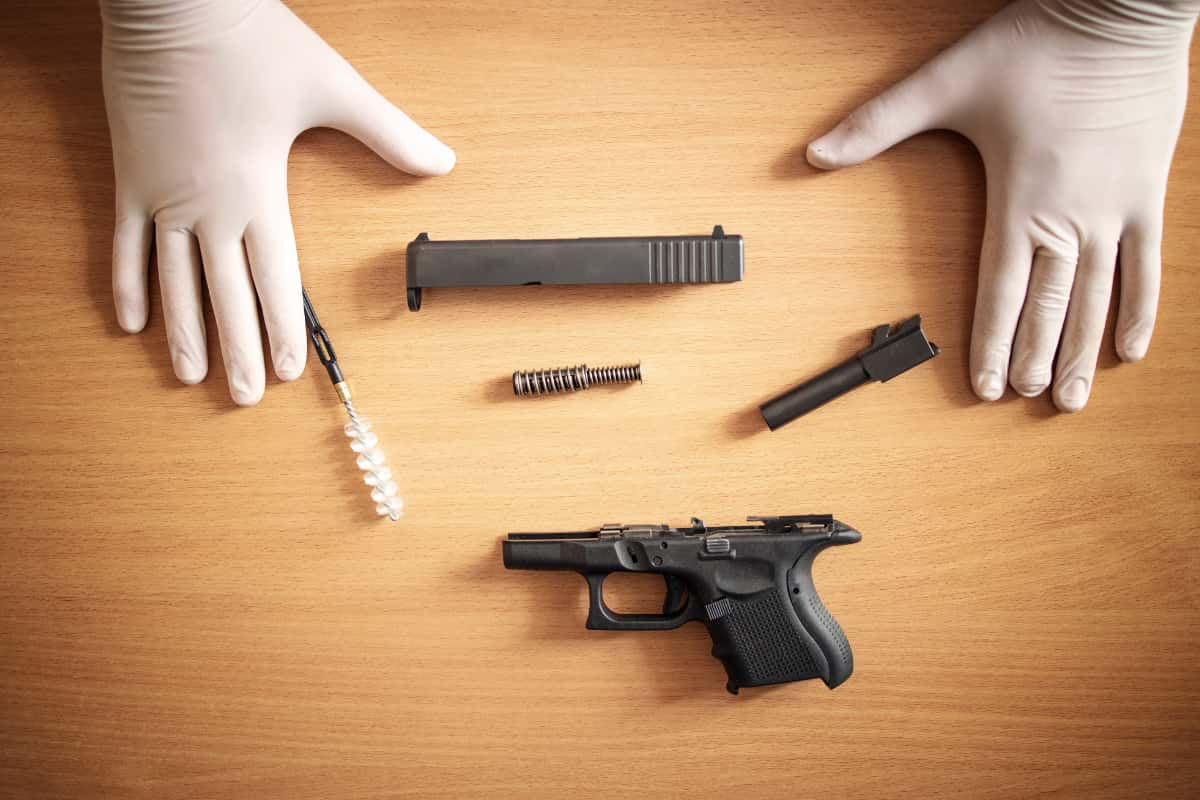
    First Step in Cleaning A Firearm

    Invest In a Good Commercial Solvent

    A solvent is a substance that dissolves something else, and when cleaning a firearm, this is very important. Unlike typical cleaning, such as washing the dishes, rubbing your firearm with some soap isn’t going to do the trick here.

    Make sure that you use an area with open windows and doors or a garage to keep fresh air flowing into the space. Use the commercial solvent to clean all of the metal parts of the firearm in a thorough manner. Ensure that the barrel is properly cleaned, as well.

    Whenever possible, clean the bore up through the breech end. Make sure that the barrel and the bore are just as clean as the rest of the parts that are metal on the weapon, and spend a sufficient amount of time doing this. In order to double-check for cleanliness, run the dry patch through. Before proceeding, let the area dry.

    Get an Oily Patch into the Barrel

    The aim of this step is to get it well lubricated. Apply a generous amount of oil into the patch and slide it in the barrel of the gun, and make sure that you reach the entire area. A light coating of oil should be applied to any parts of the gun that are made out of metal. Keep in mind that it’s important to unload your gun before starting this step.

    Store the Firearm

    To help your firearm keep the oil on all parts that need it and dry out properly, store your firearm in a horizontal position. If, for some reason, that’s not possible for you, then store it with the muzzle facing down. This will prevent clogging the back end, and instead any spillage will come out of the barrel.

    Pro tip: we definitely recommend finding a specific place for firearms that you’ve just cleaned, especially if you own a gun rack.

    Make sure that you don’t store the firearm in a vertical position, where the butt of the firearm will be facing down. Another factor that’s important to remember is to not leave the firearm laying on its side on a counter or table.

    Run a Clean Patch

    Before you use the gun, run a clean patch back and forth across the barrel, which will help you remove any excess dirt or oil that can be found there. This step ensures that when you fire, everything will go smoothly, and that there aren’t any backlogs or clogs in the barrel.

    Make sure that you use oil only for cleaning your firearms, and not for other stuff. By placing it in the same areas as your guns or storing it in the gun safe, you will ensure that no one else is using it for a purpose other than cleaning guns. Plus, that way, you’ll always know where it is.

    Try to make a habit out of cleaning your firearms on a regular basis. Always follow the same procedure when starting the first step in cleaning a firearm. When cleaning the same gun, there shouldn’t be any variations or changes in steps. You should be consistent in the way you clean your weapons. Find a rag that you will use for cleaning your firearms, and always keep near you, just like the oil.

    Final Thoughts

    Now that we’ve covered what is the first step in cleaning a firearm, and other gun cleaning basics, you’re in a better position to keep your weapon clean and safe.

    Remember: cleaning your gun is much more than just keeping up appearances. A clean gun is also a gun that’s reliable and safe to use. We hope that you found this article informative and that you now know all of the steps you need to take to properly clean your firearm.

  • The Different Sizes of Handguns

    The Different Sizes of Handguns

    The-Different-Sizes-of-Handguns

    Do you remember that one movie where the spy pulls out a tiny gun from his ankle holster? Or how about that action flick where the cop disarms the suspect’s large pistol? You should know by now that handguns come in different sizes, as they’re used for a variety of purposes – all with their own set of pros and cons.

    While pistols do come in a variety of shapes, mainly there are four standard sizes; full-size, compact, sub-compact, and pocket. The length of the barrel and the grip are the main determining factors of handgun sizes. The largest pistol will feature barrels that go beyond four and a half inches, while the smallest would have a barrel that’s less than three inches.

    While all handguns follow the same inner mechanisms, there will be slight operative differences in their functionality if you base their performance on size. In other words, some handguns will work a little bit more efficiently than others. However, this will all essentially boil down to purpose, concealability, and personal preference.

    The Different Sizes of Handguns

    1. Full-sized Handgun

    The standard go-to weapon for law enforcers and beginners alike, full-sized handguns are robust, sufficiently capacitated, and easy to use. This may surprise you, but do know that a full-sized handgun’s overall weight fundamentally makes it better at handling recoil, thus giving you a more accurate shot. It also offers a comparably large, comfortable, secure grip – even without the magazine loaded in yet.

    While a full-sized handgun offers you great stability, its size becomes a disadvantage when you’re trying to conceal it. Conceal carriers of full-sized pistols usually utilize a shoulder strap holster for added support, and rarely ever use belly bands or IWB holsters. A full-sized handgun is great but will be tough to carry concealed.

    2. Compact Handgun

    Though it’s a few inches smaller than a full-sized handgun, a compact handgun offers just about the same stability as a full-zed handgun. Despite its shorter grip and barrel, your hand will manage to wrap around this firearm just as comfortably without the magazine.

    A compact handgun usually has a barrel that’s between 3.5 to 4.5 inches in length. This makes them more ideal for concealed carry. Additionally, compact handguns may also accept a full-size magazine, allowing for greater capacity at a significantly lesser size. Compact pistols are more suitable for IWB holsters and belly bands – but may still be uncomfortable for some as it’s only an inch smaller than a full-sized handgun.

    3. Sub-compact Handgun

    Going even smaller, a sub-compact handgun features standard barrel sizes of 3 – 3.5 inches in length. One key difference you’ll instantly notice is that grip falls a little short without the magazine – making it a little bit more uncomfortable to handle. Sub-compact handguns usually come with magazines that have grip extensions for a comfier hold on the weapon.

    Comparably, sub-compact handguns will be a lot easier to conceal than their larger counterparts. If you don’t mind the attachments it needs to function more efficiently, a sub-compact will be a very handy firearm in your arsenal – able to fit snugly in your belly band or IWB holsters.

    4. Pocket Handgun

    Finally, we have the sneakiest of them all – the pocket handgun. With a barrel that’s 3 inches or less and a grip that barely reaches your ring finger, this handgun is a popular choice for self-defense. Also called “micro pistols”, these tiny handguns are so conveniently small that they can fit in your pants pockets, undergarments, and God knows where else.

    Maximum concealment is the advantage of a pocket handgun. It usually holds just about five rounds or less and is the worst at handling recoil. Due to its size, it lacks stability and accuracy. This makes micro pistols ideal only for close-range encounters, as it’s going to be very difficult to aim, let alone shoot, with something so small. Despite this, pocket handguns are still widely used and are equipped as backup guns alongside their larger siblings.

    Size Matters

    Where and why you need a handgun are important points to determining the size perfect for you. If you’re a beginner at a shooting range and want to master all the basics, the full-sized pistol is your best bet.

    However, if you need something conveniently close to you at all times, then a sub-compact or pocket handgun maybe your ideal pistol. Whichever handgun size you choose, be sure to be responsible.

    A gun is still a gun, and no matter what size it is, it should be dealt with utmost vigilance.

  • Types of Handguns

    Types of Handguns

    Types-of-Handguns

    A handgun is named because it is a firearm that can fit and a shooter can hold in one hand. It is one of the most popular firearms in circulation. Handguns are usually used for self-defense, their size making them easy to conceal and carry around. Shooters also use them for target shooting and small name hunting.

    There are five different types of handguns that you can find. Each firearm possesses unique characteristics, such as the cycle of operation or rate of firing and the loading technic. As a shooter, you should know what type of handgun you carry to perform and use the firearm better and with ease. Knowledge of the different pistols would also help you decide which one to go for when choosing.

    Types of Handguns

    1. Single Shot Pistols

    The single-shot pistols are among the earliest form of handguns released in the market. They were so-called “pocket pistols” because they are easy to conceal and carry around in your pocket. It is also regarded as one of the most basic firearms and essentially is like a small cannon-type of weapon because of its explosive shots with every trigger action.

    Essentially, it is so-called a single-shot handgun because it discharges a single round of explosive ammunition. It needs the shooter to reload the firearm after every single shot. Compared to revolvers and automatic types of handguns, a single-shot handgun is much less complex to use.

    2. Multi-barreled Pistols

    Contrary to single-shot pistols, multi-barreled handguns were created and developed with more than one barrel. A multi-barrel pistol enables a shooter to fire several shots of ammunition without having to reload with every single fire. Multi-barrel handguns are popular among shooters because of their increased and powerful shooting capability.

    3. Revolvers

    Revolvers are a repeating type and multi-loading firearm. They have a cylinder or rotating cartridge with different chambers, which chambers contain several rounds of ammunition. The number varies according to the brand and model. In reloading a revolver, the action swings out the entire wheel of the chamber where you can place your fresh rounds of ammunition.

    Revolvers enable a shooter to fire successive shots. The cylinder would rotate every time you press the trigger with the chamber containing a fresh round of ammunition. Compared to other handguns, revolvers have better accuracy with more powerful firing ability.

    You can find revolvers in two different forms, the single or double actions revolver. A single-action revolver performs only the single action of releasing the hammer or striker. It requires the hammer to be already cocked before it can fire. On the other hand, a double-action revolver performs two actions of cocking the hammer and releasing it.

    4. Semi-automatic Pistols

    After the revolvers, the next innovation in the firearm industry is semi-automatic pistols. A semi-automatic pistol is a repeating type of handgun that uses the energy from a discharge automatically reloading for the next shot. They are semi-automatic because while it automatically loads the next round, it requires a shooter to pull the trigger manually to fire that subsequent shot. Essentially, a semi-automatic handgun discharges only one round of ammunition with each trigger depression.

    5. Automatic handguns

    While semi-automatic handguns only fire a single shot with every trigger action, automatic firearms can fire consecutive and rapid shots with each depression of the trigger. With its burst capability, an automatic pistol is more powerful than a standard semi-automatic one because of its ability to fire rapidly without pressing the trigger manually. They were created to be a lighter weapon but have more firing capability for the expert shooters to use.

    Today, shooters only use automatic handguns for a special purpose with limited utility. Although they are indeed more powerful, with their ability to rapidly fire successive shots, they are also much harder to control compared to semi-automatic ones. Only the best shooters can fully utilize this lightweight and powerful handgun.

    Conclusion

    Those were the five different types of handguns that you can find in the firearm industry. Each is unique on its own and has its specific utility. Now that you know the functions and capabilities of each type, it is easier for you to identify and evaluate which type of handgun is convenient and works better for your use.

  • Gun Recoil

    Gun Recoil

    Gun-Recoil

    What is Recoil in a Gun?

    You’ve probably heard the word “recoil” thrown around before. The formal description says that it means to flinch, wince, or drawback out of fear or disgust. In gun lingo, however, gun recoil refers to the kickback you feel after firing. When the trigger is pulled, the bullet is launched out of the barrel by a tremendous force.

    As physics would have it, this force exerts an equally powerful push in the opposite direction – which you can instantly feel running through your fingers, hands, and arms.

    While some may not see recoil as that big of a deal, it affects a lot of first-timers who haven’t quite gotten used to shooting a gun just yet. Over-anticipating gun recoil has been known to mess up with accuracy, and even cause injury. Ultimately, it’s the anxiety that gets to first-time shooters – sometimes bringing them to close both their eyes when they pull the trigger!

    The shooting game may seem like an intimidating sport, but everyone starts somewhere. Every expert started out recoiling from their recoil when they first fired a gun. The key here is just to get used to the force, practice as much as you can, and ultimately gain the strength to keep both eyes on the target.

    How to Fix Anticipating the Recoil?

    Getting used to recoil doesn’t happen overnight. Just like conquering fear, this takes a lot of motivation, nerve, and some patience. The first thing you must remember is that you are not alone. All gun-wielding experts had to get used to recoil as well, so when it comes to running through guidelines, it’s a tale as old as time.

    Keep Steady

    First, you’re going to have to stay grounded. A lot of beginners tend to get very impatient and will aim for a bullseye on their first day – but they’re likely only going to hit it out of sheer luck. If you want to be consistent, you’re going to have to establish a proper stance – stable and unwavering.

    For the basic stance, align your feet with your shoulders and relax your knees. With your weapon in hand, bring your hands in front and lean slightly forward. This stance not only keeps you steady, but it’s also ideal for receiving the recoil. Practice this stance and make sure none of your muscles are stiff.

    Breathe

    One way to keep your muscles relaxed is to take slow, deep breaths. You become much more at ease with your surroundings if you do this, even beyond the shooting range. As you position yourself into the proper stance, inhale through your nose and exhale through your mouth. Do this until your heartbeat slows down a bit, and you feel your muscles relax.

    With the combination of a proper stance, a calm mind will help you spot your target better. Ideally, you shouldn’t even be thinking about hitting that bullseye just yet. Master your stance and breathing and try shooting with an unmarked target first. this takes the pressure from hitting the center and will keep you focused on your posture and handling.

    Practice

    In the end, to fit anyone’s gun recoil anticipation is just to keep practicing and practicing. You’re going to face that dreaded recoil sooner or later – but if you’re hesitant about heading down the shooting range to do this, you don’t have to use real rounds just yet.

    There are many options to choose from when it comes to practice shooting. Look around your area for any virtual simulation shooting ranges, or load up a simulation gun with some CO2 cartridges. These will give you that accurate real gun recoil – minus the live rounds. Practicing several times a week for thirty minutes will ensure that your muscles will get used to receiving the recoil. If you keep at it, over time you won’t even flinch.

    Trust the Process

    Remember to not rush yourself if you want to fix your anticipation for gun recoil. Some people may learn this trait faster than you, but if you find yourself rushing then you’re in for a world of hurt. Have faith in your daily practice and get used to gun recoil without a hurry. Your brain and muscles will eventually sync, and you’ll eventually be able to handle shooting the real rounds… maybe even hit a real bullseye!

    Keep in mind that shooting is a fun, rewarding sport that requires a lot of discipline. Safety should always come first, so the last thing you want is a shooter who shuts their eyes the moment they pull the trigger. Your anxiety over gun recoil is not a beast you can shoot down – but rather, a beast you can tame. Be patient with yourself, and soon you’ll be receiving gun recoil like it was nothing.

  • What is a Pancake Holster

    What is a Pancake Holster

    What-is-a-Pancake-Holster

    A pancake holster is made up of two pieces of material stitched together to produce a flat-like pouch. As the name suggests, this little pouch resembles a pancake, thus the name.

    Law enforcement and civilians prefer the pancake holster to carry weapons because of its superb performance in concealing the gun. sit close to your body, high on your hips, and are not visible even if you wear lighter clothes.

    Most pancake holsters available on the market today feature two and three belt slots. A prerequisite before you can wear a pancake holster is you need to be wearing a belt because you will loop your holster.

    It is recommended that three-slot pancake holsters are worn on your stronger side or when you have no option but to have it on your weaker side, use it as a cross-draw holster.

    Advantages of pancake holsters

    It is no wonder that many gun owners would have a pancake holster or two to have their guns close. The many advantages of pancake holsters make it a great purchase.

    If you are interested in getting one for yourself but have some hesitations, the following perks can surely make you confident in buying one.

    • Excellent Concealment – law enforcers and civilians that carry but would need their weapons obscured love how pancake holsters can conceal so well. It doesn’t have those budging outlines that can give away the fact that you are carrying. Even if you are wearing light clothing, the holster can mold your gun close to your body.
    • All Day Comfort – with pancakes holsters, you need to attach it to your belt and then position and move it anywhere along your waist. Leather pancake holsters especially mold to your body so you can bend, run, sit, and do your usual activities without that feeling of something pushing in your skin.
    • Guaranteed Security – the last thing you need during a chase or a confrontational situation, and suddenly your holster falls. It becomes a distraction that can lead to a deadly outcome. If your pancake holster is securely attached to your belt, it won’t go anywhere. And since it is close to your body and usually hidden by the tails of your shirt and jacket, it won’t be easily grabbed or removed from you.

    Disadvantages of pancake holsters

    All kinds of holsters, including the pancake would have some drawbacks. It is wiser to be aware of these opportunities to find a workaround and not be caught off-guard that it is not working as expected.

    Here are some of the reasons why some gun owners would say no to a pancake holster:

    • Challenges in re-holstering – since pancake holsters are too secured, re-holstering might not be as seamless as drawing it out. The precious seconds you need to fumble around to get your gun holster back can be enough turn-off for some owners. Sure, it gets easier with practice, but this can make all the difference in real-life situations.
    • Wearing a Belt is a Must – if you want to use a pancake holster, then you always need to be wearing a belt because this is where you’ll attach it to. For some, the belt itself and having it in your middle all day might not be a comfortable option.

    Types of pancake holsters

    classified based on the material that they are made. Conventionally, holster artisans only produce pancake holsters made of leather, but today, there are new varieties of materials like molded Kydex, cloth, and nylon.

    So far, the market today is a tight competition between the traditional and all-around favorite leather Kydex materials.

    How to care for and maintain 

    Depending on the material used for your pancake holster, care and maintenance are all relatively easy and almost similar. The key to taking care of it is doing it regularly. You don’t just begin maintaining it when there are already tell-tale signs of damage.

    For those made of leather, you can use a damp and soft cloth to clean it. You can also regularly apply some leather conditioners to help it retain its shape and color while promoting a softer feel. Just make sure that every after cleaning, the holster is completely dried.

    For Kydex and nylon pancake holsters, wiping them with cloth, lukewarm water, and soap should be enough. Just remember that you don’t need to submerge it in water, and you need to ensure that it is completely dry before subsequent use.

  • What is a Hybrid Holster

    What is a Hybrid Holster

    What-is-a-Hybrid-Holster

    Modern gun owners are fortunate because they have plenty of options when choosing the best weapon-carrying system. One accessory that is growing in popularity is the hybrid holster. This type of handgun-carry technology offers exceptional stability, comfort, and customization.  So, what is a hybrid holster, and what else do you need to know about it? Let us find out.

    What is a Hybrid Holster?

    A hybrid holster is a weapon-carrying system that features at least two different materials. Traditionally, gun holsters come in genuine leather materials. Other manufacturers use neoprene, thermoplastic, or nylon in their holster design.

    Conventional hybrid holsters have a soft and pliable backing, often made of leather or neoprene. The flexible nature of these materials makes it ideal for contact with the user’s body, minimizing friction and irritation while improving overall comfort.

    The holster shell that houses the gun barrel and trigger features advanced hard polymer materials. It protects the weapon against dust, dirt, vibrations, shocks, and other unwanted elements. The shell’s interior often comes with a soft lining to protect the firearm against scuffing and staining.

    Advantages

    The hybrid holster’s unique design gives it exceptional stability. The backing almost always features a two-clip system spaced wide apart that you can secure in your belt or waistband. It prevents the unnecessary shifting and tilting of your weapon. Weapon stability provides predictability when drawing your gun because you know where it is.

    Another advantage of a hybrid holster is comfort. Some manufacturers make their unique holster backing that improves breathability, moisture-wicking capability, and ergonomics. Others use either leather or neoprene, two materials known for comfort.

    Customization is another advantage of a hybrid holster over other types. High-end hybrid holsters allow you to adjust handgun retention, angle or cant, and depth. It is perfect for all body types.

    Disadvantages

    The main issue about hybrid holsters is that it takes time to put them on in the waistband or belt because of its two-clip system. It is also larger than other handgun holsters, which can be a nuisance to some. A hybrid holster is also not immune to wear and tear, especially the leather backing. It can impede weapon draw.

    Types of Hybrid Holsters

    The main thing to understand about a hybrid holster is that it always features a hard polymer handgun shell and a non-polymer backing material. As such, you can find a hybrid holster across the different holster designs.

    • IWB Holsters

    These hybrid holsters put your handgun inside your waistband, ensuring optimum concealment without sacrificing ease of weapon draw. An appendix holster is a popular IWB subtype.

    • OWB Holsters

    Like an IWB holster, this weapon-carrying system clips in your waistband or belt with the gun outside the body. It provides excellent access to your firearm. A paddle holster is a good example of an OWB holster.

    • Ankle Holsters

    Perfect for concealing compact and sub-compact handguns, a hybrid ankle holster secures your weapon on the inside of your non-dominant leg just above the ankle. It is the holster of choice of uniformed officers as a carrying mechanism for their secondary firearms.

    • Shoulder Holsters

    The quintessential handgun concealment method, shoulder holsters provide optimum comfort and ease of weapon draw. These holsters distribute weight evenly, ensuring unrestricted mobility.

    How to Care & Maintenance

    Caring for and maintaining a hybrid holster requires an understanding of its component materials. The hard polymer shell does not demand meticulous care, except for regular and frequent dust and dirt removal. Wiping these surface contaminants from the casing should keep it looking brand new.

    Maintaining the backing can be tedious if you have a leather material. You must clean it with warm water and leather-friendly soap when it gets too soiled. The periodic application of a leather conditioner is also essential in keeping its integrity. However, one should never use these products more often than necessary because they can undermine the leather’s strength.

    Neoprene or nylon backing does not require complex maintenance. A simple dusting of its surface should keep it in pristine condition. Occasional washing can also help.

    Conclusion

    A hybrid holster is a type of weapon-carrying system that incorporates at least two different materials in its design. However, the handgun shell should always feature a hard polymer composite material to give the holster exceptional stability, customization, and gun retention characteristics. The next time someone asks you what is a hybrid holster, you already know what to say.

  • What is a Kydex Holster?

    What is a Kydex Holster?

    What-is-a-Kydex-Holster

    Kydex is the brainchild of Rohm and Haas Company, a materials manufacturer working with the aviation interior industry. By the late 1960s, the company realized that the Kydex thermoplastic sheets could be turned into something more given its malleability properties.

    Today, Kydex is now a general term used to classify plastic holsters. This is the new and more popular material being used in creating holsters and has more advantages when compared to other materials like leather.

    This plastic-life composite material was initially used in aircraft interiors. It is transformed into extremely thin sheets that can be molded to your gun’s size and style when heated. With Kydex holsters, it can create a perfect replica of your pistol, including every nook, cranny, and angle.

    Advantages of Kydex Holsters

    Considered a competent and worthy investment, Kydex holsters is a forerunner among all the available holsters on the market. It is meticulously designed and precisely engineered that you would have to question yourself why you didn’t get one sooner.

    If you still have hesitations about getting a Kydex holster, here are some of the perks and wins of owning one:

    • Perfect and Secure Fit – once a Kydex cools down, it will retain the molded shape of your gun, and it becomes a durable and very rigid holster. One feature that makes Kydex stand out is when you put in your gun and slide it to your holster, you can hear your gun snap into place. You can even confirm it by feel that it is secured.

    This is important when you are in a situation that is confrontational and close-ranged. You don’t want your assailant or your opponent to use your gun against you quickly.

    You can test this yourself by taking your holster out and turning it upside down. And you can even shake it, and your weapon will stay resolutely locked and not fall out of the holster.

    • Long-term investment – unlike leather which can lose its shape after years of use, Kydex holsters are designed to keep their shape for a long time. You can use this holster longer and be confident that it will function and serve its purpose like it did the first time you used it.
    • Easy re-holstering – this can make all the difference if you only have a single hand free to reholster your weapon. When faced with difficult situations, you can’t afford to get distracted and use both hands to re-holster your gun. These few seconds can be a life-and-death situation. Thanks to the rigid design of Kydex holsters, you can have a more effortless and seamless experience of reholstering with one hand.

    Disadvantages of Kydex Holsters

    • Reduced Comfort – while a rigid design keeps your gun in place, it might cause you some discomfort and even pain after wearing this holster for extended periods. Having this stiff material pushing and pressing down on your body parts is not a pleasant experience.
    • Not too Weapon Friendly – another complaint against Kydex holsters is they can cause slight damages to your gun. This is because these holsters have points where they can rub up against your gun and impact its finish.
    • Limited Use – Kydex holsters are not the general kind of holsters you can use for several weapons. You can only work one model for a single Kydex holster. If you have several guns and want them all to be sheathed by a Kydex holster, it will be a single holster for every model and brand.

    Types of Kydex Holsters

    Knowing the different kinds of Kydex holsters is vital so you can guarantee that they can meet your needs and serve their purpose well.

    • Inside the Waistband (IWB) Kydex Holsters – these are intended for easy concealment and user comfort. You can wear this kind of holster all day long without struggling with any uneasiness or nagging body aches.
    • Outside the Waistband Holsters (OWB) Kydex Holsters – this is intended for a lesser concealed option. They are comfortable to wear and convenient to access.

    How to care for and maintain

    One of the more powerful features of Kydex holsters is it requires very minimal maintenance. It is resistant to oil, solvents, and sweat. You don’t need cleaning agents, lotions, and conditioners to clean it.

    All you need is to use lukewarm water and soap to wipe it clean, and you are all set. If there are some stubborn stains or heavy dirt, you can use a soft bristle brush. If cleaning daily is not possible, a three-time weekly care routine should be enough.

  • What Is a Retention Holster

    What Is a Retention Holster

    What-Is-a-Retention-Holster

    Most newbie gun owners may have never heard of a retention holster before, while law enforcement and military officers use it in their duty. It is a weapon-carrying system that guarantees different levels of handgun security, allowing you to retain possession of your firearm when somebody else has an eye for it. So, what is a retention holster?

    What is a Retention Holster?

    All holsters can retain or securing the handgun they carry. However, most holsters can do so only up to a certain level. In general, holsters provide a secure fit to a pistol, preventing it from falling off. Gun experts call this type of retention passive because the user does not need additional mechanisms or systems to secure the gun.

    Unfortunately, passive retention does not secure your firearm when another person tries to grab it and take it away from you. It is easy to lose one’s firearm in a grab-and-snatch situation, not knowing where your gun will end up next.

    That is why you need a holster with an active retention system. Weapons specialists call these retention holsters because they do a better job securing your firearm in its holster.

    As such, a retention holster is any weapon-carrying system with mechanisms or qualities that prevent a person other than the gun owner from accessing the firearm. It can also inhibit the accidental dislodging of the pistol from the holster when in a physically demanding situation.

    The retention holster features a lock that secures the handgun. The user must first deactivate this locking mechanism before he can draw his firearm.

    Some holsters come with more than one locking mechanism. The more security features the holster has, the better it is in retaining your handgun.

    Advantages

    The main advantage of a retention holster is weapon security. It makes it difficult for criminals to take the gun from you because only you know how to disengage the holster’s locking mechanism.

    The implications are immense. You get to prevent another person from using your handgun against you or other persons. It also stops someone from using the weapon in other criminal activities, including robbery, burglary, and intimidation.

    Disadvantages

    A retention holster’s strength can also be its Achilles heel. To the untrained gun owner, disengaging a few holster locking mechanisms can prolong the drawing of the weapon. Extending the time to pull out one’s handgun from the holster can have serious consequences.

    Types of Retention Holsters 

    Retention holsters come in different levels, according to the number of safety mechanisms the user needs to disengage before he can draw his weapon. The more locking systems a retention holster has, the longer it takes for the user to draw his firearm. The good news is that it will be almost impossible for anyone to take the gun away from the owner without any action from the user.

    • Level I – Moderate Retention

    The retention holster relies only on the friction its inside surface has against the handgun. In a way, you can call this passive retention. Ideally, the user should retain possession of his firearm within five seconds after a grab-and-snatch attempt.

    • Level II – Good Retention

    Retention holsters in this category have an active retention system that works with the holster’s inherent frictional ability. The mechanism can be a back strap, a thumb or finger-operated lever, or a hood.

    • Level III – Enhanced Retention

    A Level III holster adds another active retention system to a Level II holster. An excellent example of this is a push button-activated hood shroud.

    • Level IV – Optimal Retention

    These holsters have at least three safety mechanisms. Only trained professionals should carry such a holster.

    How to Care & Maintenance

    Caring for a retention holster is like the maintenance of other holster types. Leather holsters require frequent cleaning of dust, dirt, and other surface contaminants. Keeping it dry without using artificial heat sources such as blow dryers can help retain the leather’s integrity.

    The occasional application of a leather conditioner can help strengthen the holster while keeping it clean. If it becomes soiled, you must wash your holster immediately and allow it to dry completely. Use glycerin soap and warm water to clean your leather retention holster. It would also help to spray silicone to protect the leather.

    If your retention holster features thermoplastic materials like Kydex, cleaning is more straightforward.

    Conclusion

    A retention holster is a handgun-carrying accessory that features at least one gun-retention system. It secures the weapon in the holster, preventing people other than the owner from taking the firearm from its holster.

  • How to Conceal Carry Without Holster

    How to Conceal Carry Without Holster

    Conceal-Carry-Without-Holster

    Whenever someone buys his very first handgun, gun experts will always advise him to invest in a good quality holster. Not only does it ensure your safety and that of everyone else. A well-built holster can also help in better concealment. However, not everyone agrees they need a holster to conceal carry. If you are like these gun owners, you should learn how to conceal carry without holster safely.

    Why Some People Choose Not to Use a Holster

    You do not need a holster when you find somebody else’s handgun on the street or anywhere else. Police officers who confiscate weapons from a person also do not need a holster. However, in both instances, handgun security is essential. You do not want to lose the firearm or fall into the wrong hands.

    Most people do not use holsters because they defeat the purpose of concealment. Unless your weapon is lipstick-sized, handguns are generally bulky. Securing them in a holster adds bulk and heft to your firearm. If you pass through a body search security checkpoint, there is a good chance the officer will still know you are carrying a pistol.

    How to Conceal Carry Without Holster

    Responsible gun owners never conceal carry without a holster for their safety and that of others. However, there are instances when getting a holster is out of the question or you simply do not like it. Regardless, it would be best to conceal carry safely without a holster.

    • The “Mexican” Carry

    Some non-holster-using gun owners tuck their weapons inside their waistbands. It is similar to an IWB holster sans the holster. That is why many people also call it the ‘Mexican’ carry because it is the preferred carrying method of 19th-century Mexican vaqueros.

    The main issue here is safety since the handgun sits next to your body inside your pants. There is a chance that it will discharge and hurt you in the process. It also exposes the magazine release and the trigger, leading to handgun inoperability.

    • Pocket Carry

    If you have a compact or sub-compact handgun, you can slip it into your pocket. Suits and some jackets have a hidden pocket on the inside of the chest panel, while others have it at waist level. Baggy trousers also have large pouches, so you can also conceal your weapon here.

    Like the Mexican carry, it is not safe to carry your weapon in your pocket. The risk of accidental firearm discharge remains high. Errant strings or cords in your pocket can get entangled with the trigger.

    It may also not be easy to pull out your handgun from your pocket, defeating the purpose of self-defense. In some cases, your gun may fall off your pocket without you noticing it.

    • Bag Carry

    Tucking your firearm in your waistband or slipping it into your pocket is not always safe. A better option is to conceal it in your bag, backpack, pouch, or large purse. It places the weapon farther away from your body.

    However, the concern here is that other items in your bag can get entangled with your firearm and cause an accidental discharge. It may also not be the easiest way to pull out your handgun when needed.

    • Other Ingenious Ways

    If you do not like any of the three methods of carrying your handgun without a holster we shared above, you can try the following options.

    Get a large book and make cutouts on the pages following your gun’s outline. Nobody will know you have a pistol in your book unless they inspect it. The issue here is it can be cumbersome to draw.

    Another option is to slip your weapon in a folded newspaper or rolled towel. It is not as effective as other methods, but it will do temporarily.

    Safety Considerations When Carrying Your Handgun without Holster

    The danger of carrying your handgun without a holster is the risk of accidental discharge. If you have to conceal carry without a holster, it would be wise to buy a trigger guard. This small and affordable device slips over your handgun’s trigger to prevent accidental discharges. You will feel safer carrying your weapon in your waistband, bag, or pocket with this gadget covering your trigger.

    Conclusion

    Learning how to conceal carry without holster properly is crucial to ensuring your safety and that of others. Safeguarding the trigger also increases your safety level, regardless of how your handgun moves in your chosen conceal carry method.

  • What is an IWB Holster

    What is an IWB Holster

    What-is-an-IWB-Holster

    Nothing says “safe” more than an inside-the-waistband pistol holster. Concealing your carry not only ensures your protection, but also everyone else’s. An IWB is the best means of concealment and you can easily access your weapon. It’s a lot closer to your hand when at rest, and is tucked out of sight when you don’t need it.

    Traditionally fashioned out of leather, IWB holsters are designed to fit snugly around your waist and under your shirt. Although they’re designed to be hidden, they can be customized to include fancy trappings and even dyed to your liking.

    Modern IWB holsters utilize more practical, lightweight materials that are thick and water-resistant. One popular material is Kydex, which is a thermoplastic acrylic-polyvinyl chloride that is both formable and rigid. In today’s market, you can choose from a variety of high-quality leather holsters to durable thermoplastic holsters.

    Advantages of IWB Holster

    Hiding your carry close to you is always a concern, especially when you need to defend yourself from potential attackers. Typical holsters hang outside the waistband and are seen by everyone around you. These types of holsters pose a hazard and could potentially cost you your safety.

    IWB holsters keep your pistol out of sight and out of mind – ensuring that no one can just walk up and grab it when you least expect it. It also makes you look less of a threat, which means that no one will be expecting you to pull out a gun when the need arises.

    Let’s not forget how convenient it is. With modern IWB holsters, comfort is also of utmost importance. A weapon at the ready will get heavy as the day progresses. A good IWB holster will ease that discomfort. With modern designs incorporating belly bands, hidden pockets, and minimal trappings.

    Disadvantages of IWB Holster

    While IWB’s allow your carry to stay out of reach from potential sneak attacks, its inconspicuous placing could become a hassle. Unless if you’ve practiced beforehand, drawing your weapon could cost you those precious few seconds before an unwanted encounter.

    On top of having to draw a concealed weapon, having to carry it around will wear you down. Most modern IWB holsters are ergonomically designed, but wearing them for too long will become uncomfortable over time. No one likes the feeling of a heavy object constantly rubbing against your side.

    Types of IWB Holsters

    Holsters have been around since the invention of pistols. They come in a variety of forms, with mainly two different types: hybrid and non-hybrid.

    Old-fashioned holsters look like they jumped out of old Western movies – made of a hard casing and a leather base that’s stitched to perfection and dyed. Leather holsters are still being manufactured today, and have a more aesthetic quality to them. This makes them more ideal for showing off – which isn’t exactly stealthy.

    On the other, hybrid holsters utilize two types of materials – a stiff polymer shell and a sturdy, pliable base. These modern marvels have been around since plastic was manufactured, and are more commonly used by policemen and registered gun carriers alike. Hybrid holsters usually take up a lot of space, but their ergonomic designs allow for a quicker, easier draw.

    Other holster designs feature a “pancake” design, that uses just two layers of material. This holster design is great for discreet protection. With the minimum amount of material used, it manages to keep your weapon secure and hidden. Because it only has two layers, it’s got less baggage and is more lightweight. However, this minimal pancake design can get uncomfortable, and so you might want to wear an undershirt with it.

    Another design features a “winged” shape holster, that allows for smoother, quicker draw. It fastens over a larger area in the waist, which helps spread the weight of the pistol around. Some gun owners find this convenient, while others aren’t so keen on the large surface area it covers.

    How to care & maintenance

    Caring for your IWB holster isn’t so complicated. The important thing is that once you remove it from your body, make sure to hang it in a place where you can easily find it. If you’ve been sweating, be sure to wipe it off the holster as salts and oils can damage leather and plastics. Ideally, you should keep a barrier between the holster and your body while you’re wearing it.

    While drying out your holster is imperative, be sure to keep it out of direct sunlight. Putting it under the sun could ruin its form or damage it entirely. If you do want to dry it out, don’t stuff it in a dryer or put it next to a heat vent.

    Lastly, make sure to wipe it down after use – ideally with a soft cloth. Leather IWB holsters require leather care products, while thermoplastic hybrid IWB holsters need a soft cloth. You should maintain your IWB holster every day, so you can have it around for longer.